After the anticipation, drama and conspiracy theories, Sam Bankman-Fried – the former chief executive and founder of the fallen crypto exchange FTX – is finally arrested, multiple news outlets reported.
Authorities arrested Bankman-Fried on Monday, December 12, in The Bahamas – where FTX is headquartered – after the crypto tycoon was criminally charged by U.S. prosecutors.
Bankman-Fried was arrested without any untoward incident.
“Earlier this evening, Bahamian authorities arrested Samuel Bankman-Fried at the request of the U.S. government, based on a sealed indictment filed by the southern district of New York,” Damian Williams, the U.S. Attorney for the Southern District of New York, tweeted, according to Agence France-Presse via The Philippine Star.
USA Damian Williams: Earlier this evening, Bahamian authorities arrested Samuel Bankman-Fried at the request of the U.S. Government, based on a sealed indictment filed by the SDNY. We expect to move to unseal the indictment in the morning and will have more to say at that time.
— US Attorney SDNY (@SDNYnews) December 12, 2022
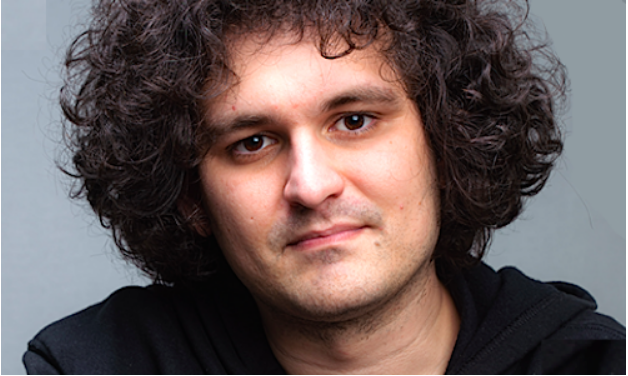
Former FTX CEO Sam Bankman-Fried. Image: Spencer Heyfron.
Collared Before Congress Appearance
The arrest occurs shortly before Bankman-Fried’s virtual appearance before the House Financial Services Committee on Tuesday, where he was expected to speak on the failure of the cryptocurrency exchange one month ago.
The Bahamas attorney general’s office issued a news release stating that they would be holding Bankman-Fried in anticipation of an extradition request from the U.S. government.
His arrest is the first tangible step taken by authorities to hold individuals responsible for the multibillion-dollar catastrophe of FTX.
Rep. Maxine Waters (D-CA), who chairs the House Financial Services Committee, expressed “surprise” at his capture and regret that the U.S. Congress isn’t going to be able to hear his side of the story.
Operating FTX, Bankman-Fried accumulated billions of dollars in personal wealth. The arrest is a startling reversal of fortune for the 30-year-old mogul who called the shots at one of the world’s biggest crypto exchanges, which was valued at $32 billion early this year.
Sam Bankman-Fried Facing Multiple Criminal Charges
Celebrities promoted his exchange platform in television commercials, and the technological prodigy became such a regular fixture in Washington, where he contributed tens of millions of dollars to various political campaigns.
According to Reuters (via Rappler), FTX, Bankman-Fried’s parents and senior executives of the company acquired over 20 properties in the Bahamas valued over $120 million during the past two years.
In a December 12 interview with Forbes, SBF once again blamed Binance CEO Changpeng Zhao for his company’s downfall. He alleged that “CZ” intended to stifle competition by destroying FTX.
Bitcoin plummeted to a two-year low following the collapse of FTX as investors feared the company’s issues would spread to other crypto organizations, which they did.
Meanwhile, New York Times disclosed, citing a source with knowledge of the situation, that Bankman-Fried is charged with wire fraud, securities fraud, wire fraud conspiracy, securities fraud conspiracy, and money laundering.
The U.S. Securities and Exchange Commission has also carried out a separate set of charges against SBF.
Some legal experts say that Bankman-Fried might spend decades behind bars if found guilty of the charges against him.
However, U.S. prosecutors must first seek his extradition from the Bahamas to New York before he can begin serving his sentence.
- Bahamas lead countries worldwide on Central Bank issued cryptocurrencies, with their Sand Dollar
- CBDCs present many advantages regarding efficiency of payments, speed and reduction of friction
- However, some very real privacy concerns and questions surrounding government power also arise
Centralised Issuance
The topic of Central Bank Digital Currencies (CBDCs) is one that is only beginning to break into mainstream consciousness.
While many crypto enthusiasts hope more countries will follow El Salvador’s lead and adopt Bitcoin as legal tender, stablecoins seemingly present as a less ambitious case for sovereign adoption, given they are immune to the volatility that plagues Bitcoin. Simply digital iterations of their fiat alternatives, the exchange rate is pegged one-to-one, and their value does not fluctuate.
But while there are small-time examples, such as the city of Lugano in Switzerland, where decentralised stablecoins such as Tether (USDT) can be used as legal tender, there are also a lot of governments working on their own, centralised stablecoins.
Countries
According to PwC, none are more advanced than the Bahamas, where the Central Bank issued a digital version of the Bahamian dollar in October 2020. Colloquially referred to as the Sand Dollar, it carries the exact same utility, legal status and authorisation as it’s conventional fiat alternative.
The advantages are many. Speed, efficiency and security of payments are the main ones, with an overall reduction in friction thanks to the blockchain. The Bahamas also hopes to leverage the publicity of the initiative, helping to place the nation as the crypto hub of the Caribbean.
The trackable nature of the blockchain will also help in restraining money laundering, counterfeit, fraud and all sorts of financial crimes. Additionally, the announcement cited the benefits that could be reaped in the loan market ,with the CBDC able to “provide an excellent record of income and spending, which can be used as supporting data for micro-loan applications”.
Disadvantages
However, not all consequences of CBDCs are positive. There are very real privacy concerns here, with the government theoretically able to track exactly what you spend, when you spend and who you spend it with. Accounts can also be frozen at will – think Tether who have frozen certain USDT in the past following hacks.
This raises all sorts of questions about a potential dystopian scenario, whereby increasingly sci-fi notions, such as social credit scores being leveraged automatically off payment activity, could be implemented by governments. Let’s say the government knew you spent $10 last night to gamble on the football, and this was automatically reflected in your credit score – or worse, your social score. It’s easy to let the mind wander to the power this would give more authoritarian governments.
Is absolute sovereign control over citzens’ finances a good thing? They already control the monetary environment regarding printing, inflation and interest rates, which is the reason so many give for turning to Bitcoin. With CBDCs, they could implement sanctions at will, have full visibility over your net worth, tax liabilities, spending habits and many other facets of your life, given how central money is to transacting in today’s world.
Conclusion
Right now, thankfully, these remain notions confined to Black Mirror plotlines. However, CBDCs do bring the potential for these scenarios closer, and open up the possibility of unfathomable power for a sovereign state. Absolute centralisation within cryptocurrency is a dangerous game, given the trackable nature of the blockchain and the digital wallet infrastructure attached to it.
Bahamas, thus far, are leading the charge. For this case specifically, all systems point towards this being merely a step towards efficiency, and an innovative tool to help build a wider crypto ecosystem for the Caribbean nation.
Still, with other governments – such as China – working on iterations of their own CBDCs, it’s valid to worry about the potential power these CBDCs could grant if leveraged in certain ways. This rings especially true for more authoritarian governments.