Cardano’s community funding pipeline just stopped mid-cycle.
Project Catalyst, the on-chain grants mechanism that has distributed over $150 million across 2,200 projects since launch, recently announced that stewardship is moving from Input Output Global to the Cardano Foundation.
Additionally, Fund15 and Fund16 won’t proceed in their proposed form until the transition completes. The Catalyst team will migrate to the Foundation to maintain continuity for existing grantees. Still, the pause leaves hundreds of applicants who prepared proposals for the next rounds without a voting timeline or clarity on funding.
This isn’t routine administrative housekeeping. Catalyst operates as Cardano’s capital allocation engine, the mechanism through which ecosystem participants vote on treasury disbursements to builders, infrastructure projects, and community initiatives.
Reorganizing that machinery mid-cycle while returning earmarked ADA to the treasury signals a decision to treat grants infrastructure as requiring governance-grade oversight before issuing new obligations.

What actually changes
The immediate mechanics are straightforward.
Stewardship transfers from IOG, the development organization that built and operated Catalyst since inception, to the Cardano Foundation, the Swiss nonprofit responsible for protocol standards and ecosystem coordination.
Catalyst team members join the Foundation to ensure existing commitments are not broken during the handover. Fund14 milestone administration continues, meaning projects already approved and working through delivery checkpoints face no disruption.
Yet, Fund15 and Fund16 effectively vanish. Fund15’s published budget showed 18.5 million ADA plus 250,000 USDM, Midnight’s stablecoin, earmarked for distribution.
That allocation is now being returned to the treasury, aligned with Intersect, the member-based organization coordinating Cardano governance.
The transition leaves applicants who spent months preparing proposals and reviewers who invested time in evaluating them without a path forward.
The language matters. The update doesn’t say Fund15 is “delayed” or “postponed,” it says running it “in its proposed form is not feasible.” That phrasing suggests structural questions about how Catalyst should operate, who administers it, and what controls govern capital deployment.
| Funding round / item | Status now | What happens to money | Who is affected | What’s confirmed in update (short phrasing) |
|---|---|---|---|---|
| Fund14 (and earlier) | Continues | Existing allocations continue under milestone disbursements | Current grantees (Fund14 and earlier) | “Commitments up to Fund14 will continue… under the milestone process.” |
| Fund15 | Paused/reset (won’t run as proposed) | 18.5M ADA + 250,000 USDM (published budget) returned to treasury | Fund15 applicants + reviewers + teams planning runway | “Running Fund15… in its proposed form is not feasible.” Funds earmarked for Fund15 to be returned to treasury. |
| Fund16 | Paused/reset (won’t run as proposed) | Earmarked ADA returned to treasury | Future applicants; ecosystem teams counting on the next round | “Running Fund…16 in its proposed form is not feasible.” Funds earmarked for Fund16 to be returned to treasury. |
| Stewardship (Catalyst operator) | Changing hands | N/A (governance/ops shift) | Ecosystem governance; anyone relying on Catalyst cadence | “IOG and the Cardano Foundation agreed to move stewardship of Catalyst to the Foundation.” |
| Operations (team + continuity) | Continuity preserved | N/A | Existing grantees; Catalyst admin workflows | “Catalyst team members will join the Cardano Foundation to maintain continuity.” |
| Applicants / reviewers | In limbo | No new disbursements via Fund15/16 until redesign | Proposal authors, community reviewers, voters awaiting a timeline | Update acknowledges impact and lack of a clear path/timeline during transition (“deeply regret the impact…”) |
Why reorganize now
Cardano’s announcement cites the need to “reassess strategy, operations, and the best path forward” after cross-entity alignment meetings in February involving IOG, the Foundation, and Intersect.
That framing points to questions beyond simple logistics: what governance structure should oversee community funding, how should accountability mechanisms work, and what administrative standards apply when distributing treasury assets at scale.
Catalyst has operated for years under IOG’s stewardship, serving as a recurring grant lottery in which community members vote on proposals using weighted ADA.
The model helped bootstrap ecosystem development, but as the program scaled to administer over 500 active projects simultaneously, the operational complexity and capital risk profile changed.
Moving stewardship to the Foundation shifts control from the product organization that built the system to the entity responsible for long-term ecosystem stability.

The broader pattern visible across blockchain ecosystems: grants programs that begin as product features eventually migrate to foundation-level infrastructure when the stakes justify formal governance.
The shift from “team-run grants” to “foundation-administered capital allocation” typically occurs when funding levels reach levels that require audit trails, milestone accountability, and legal clarity about fiduciary responsibilities.
Cardano is making that transition mid-cycle rather than waiting for a natural break between funding rounds.
That creates short-term disruption but potentially reduces long-term governance debt, the accumulation of process shortcuts and structural ambiguities that become harder to unwind as obligations compound.
The budget reset question
Returning earmarked ADA to the treasury isn’t equivalent to funds disappearing.
It’s a reallocation decision that increases optionality. Instead of automatically flowing into Fund15 and Fund16 under the existing process, that capital returns to governance control while the operating model gets redesigned.

Intersect’s role provides context. The organization maintains documentation describing a treasury administration model in which funding contracts can be deployed with milestone gates and sweep-back mechanisms, and a smart contract infrastructure that allows treasury funds to be conditionally released and automatically returned if conditions aren’t met.
That technical capability suggests the redesigned Catalyst might operate less like a recurring grant lottery and more like a treasury program with explicit administration and tighter disbursement controls.
The numbers involved make the stakes clear. At current prices, Fund15’s 18.5 million ADA allocation is worth tens of millions of dollars.
When a system regularly deploys capital at that scale based on community votes, the administrative infrastructure needs to match the financial materiality.

Who bears the cost
The immediate cost falls on Fund15 applicants. Teams that spent time drafting proposals, building community support, and preparing to participate in the voting process now face an indefinite pause with no clear timeline.
The Catalyst announcement explicitly acknowledges this: “We deeply regret the impact on those who invested considerable time and energy preparing Fund15 proposals or serving as reviewers.”
Existing Fund14 grantees receive explicit continuity assurances. Milestone administration continues, meaning the stewardship transition doesn’t disrupt projects already approved.
That protection matters because maintaining trust with current grantees is a prerequisite to any future funding mechanism working effectively.
The broader builder ecosystem faces uncertainty about pipeline timing. Cardano’s developer activity depends partly on Catalyst, a mechanism that enables teams to secure runway without external fundraising.
Pausing the pipeline doesn’t stop existing projects, but it removes a known capital formation path for teams in earlier stages.
What the new model might look like
Catalyst may return less like a recurring grant lottery and more like a structured treasury program.
Instead of large funding rounds where hundreds of proposals compete in batch voting processes, the redesigned system could shift toward targeted tracks with narrower scopes, more rigorous milestone gating, and tighter administrative controls.
That model would trade some of Catalyst’s original democratic accessibility for increased accountability and capital efficiency. Fewer proposals funded per cycle, but higher confidence in delivery metrics. More gatekeeping at intake, but clearer standards for what qualifies.
The Foundation’s approach to stewardship prioritizes durability. Foundations exist to outlive product cycles and maintain infrastructure across governance transitions. IOG operates on product roadmaps that change as the protocol evolves.
Moving Catalyst to the Foundation implies treating it as permanent ecosystem infrastructure.
What happens next
The immediate question: when will the transition be complete, and what will the redesigned process look like?
The Catalyst announcement promises “further updates once the transition is complete,” but doesn’t specify a timeline.
Several signals will clarify what’s actually changing. Evidence of treasury return mechanics appearing on-chain will show whether the new administration model relies on programmatic controls.
Whether Fund15’s published budget reappears in a modified form or is replaced entirely by different funding structures reveals the scope of the redesign.
Timeline matters: a fast restart implies mostly administrative changes, a longer redesign quarter suggests rethinking voting mechanics and eligibility criteria.
The Catalyst team’s move to the Foundation preserves institutional knowledge of community funding administration. They’ve run over 2,200 grants through completion, managing milestone verification and grantee support at scale.
That expertise doesn’t transfer through documentation, as it requires the people who learned through iteration to keep operating the machinery while the organizational structure changes.
The decision to pause mid-cycle rather than waiting for a natural break reveals priorities. Letting Fund15 and Fund16 proceed under the old model would have avoided applicant disruption but would have perpetuated the governance gaps the transition aims to close.
Choosing the disruptive path suggests treating those gaps as material enough to justify immediate correction.
Cardano’s community funding isn’t disappearing. It’s being reorganized to match the scale and risk profile it reached. The framework exists. The budget exists.
The demand from builders exists. What’s being redesigned is the governance surface that connects them, and that infrastructure determines whether ecosystem funding operates as political theater or actual capital formation.
Cardano Builders are Now Betting on AI and Quantum Computing Growth TradingView
Source link ]]>
Cardano Builders are Now Betting on AI and Quantum Computing Growth Yahoo Finance
Source link ]]>
Cardano And Brale Empower Builders And Enterprises With Compliant Digital Solutions BlockchainReporter
Source link ]]>
Cardano Project Catalyst Unveils 50M ADA Funding for Builders and Innovators | Bitcoinist.com Bitcoinist
Source link ]]>
Cardano EMURGO BUILD 2023: $2M Prize Pool For Web3 Builders TronWeekly
Source link ]]>
Shiba Inu’s BONE Records New Listing, Shibarium Builders Give Official Update U.Today
Source link ]]>
Cardano, like any other blockchain, is constantly evolving, and on-chain evolution often happens with a hard fork to enact new or updated functionality.
On Cardano, these events come a few times a year, and are often named after important figures. The next one of these, named the “Vasil hard fork,” is almost here and is hotly anticipated by many. This significant step introduces a range of new features that will enhance Cardano’s performance, throughput and scalability. In turn, exchanges and DApps interacting with — or built on top of — the blockchain will also be affected, as some of the changes will not be backward-compatible.
This post is structured in four parts: background information about hard forks (and the hard fork combinator, the unique technology that Cardano uses during hard fork events), what’s included in the Vasil update, what developers and other chains should expect, and the options open to the SundaeSwap community following the implementation of Vasil.
There are many definitions floating out there, but the simplest is: a hard fork is a radical change to a blockchain’s protocol that often (but not always) results in the creation of two branches (‘forks’), essentially two blockchains. During a hard fork event, some transactions that would have been valid before the fork may become invalid on the upgraded fork. Because of this, a hard fork requires that all network nodes upgrade to the new protocol rules. These changes may be radical, but hard forks are relatively common.
A blockchain can undergo multiple hard forks. For example, Bitcoin has had four major hard fork events: Segregated Witness (SegWit), Bitcoin Classic, Bitcoin Cash, and Bitcoin Gold (2015 for SegWit, 2016 for Classic, and 2017 for Cash and Gold), plus a myriad of other smaller forks.
Ethereum meanwhile has also undergone multiple hard forks. Notably, one of Ethereum’s major forking events was sparked by the now infamous 2016 DAO hack, resulting in a network split. The fork was done, somewhat controversially, to return the stolen ether (all $60 million of it) to its owners. This was done by rolling back the Ethereum chain, which effectively created a new fork: Ethereum Classic. Those who refused to accept the hard fork (and the return of the funds to their owners) stuck to Classic. Everyone else moved on to the Ethereum chain that remains one of the major crypto players to this day.
Hard fork events are often deemed ‘traumatic,’ in the sense that they cause significant disruption to chain activity. Sometimes, the network must be stopped for a time altogether to implement the new code base. Nodes that are not upgraded quickly enough will reject the new rules; DApps might experience unexpected behavior or stop working altogether; and so on. Regardless of what triggered the fork, whether it was planned (as Vasil is), or whether it occurred in response to adversarial behavior (such as the DAO hack), a hard fork is no small task. They require very careful planning, testing and implementation.
One core principle held by Cardano’s developers is in the importance of ‘smooth’ code updates. So they came up with an ingenious way of ‘softening’ the impact of hard forks on their chain and eliminating the ‘trauma’ associated with these on-chain events: the hard fork combinator (HFC). This piece of technology does exactly what it says on the tin: it combines two protocols into one single protocol. Cardano engineers refer to this as “sequential combination.” In practice, following the forking event, the chain runs the original protocol for a time before switching over to the updated protocol.
Herein lies the uniqueness of the HFC. Since block production does not stop, there is no break on the chain, leading to a smooth and graceful transition between protocols. As an analogy, think of the evolution of the Cardano blockchain as a relay race, with every hard fork representing the point when one runner hands the baton over to the next one. And for a few moments, both run in perfect synchrony, to ensure the baton handover goes smoothly. Then, the relay runner takes off. On Cardano, these events happen a few times a year, and so are often given specific names. The next one, happening soon, is the “Vasil” hard fork.
Vasil has been running on a testnet since 20:20 UTC on July 4. The testnet deployment enables two things: the monitoring of on-chain code behavior, and preparation for the final integration process. It gives project developers, stake pool operators (SPOs), and exchanges time to test their code on the new fork ahead of the planned mainnet deployment on July 29th.
Vasil represents a very significant update for Cardano. According to the official blog post, this update will bring increased functionality, performance, scalability and interoperability to Cardano through several mechanisms, including diffusion pipelining and four Cardano Improvement Proposals (CIPs), CIP-31, CIP-32, CIP-33 and CIP-40. We’ll explain each of these below.
Diffusion pipelining improves block propagation times, thus enabling higher throughput. Essentially, pipelining streamlines the way in which blocks are validated and propagated — the goal being the propagation of a block across the network well within five seconds of its creation. Pipelining achieves this by allowing a block to be propagated before full validation has occurred.
Reference inputs (CIP-31) — A datum is simply a piece of information. In the extended unspent transaction output (eEUTXO) model that Cardano uses, each output of a transaction carries (the hash of) some datum. Pre-Vasil, this meant that for a script to “see” a datum, it had to be spent as one of the inputs to the transaction. This in turn only allowed one transaction to use that datum at a time. The entire process was very inefficient.
The reference inputs feature enables looking at the information contained within an unspent output without having to actually spend it. This allows many transactions to read and utilize this data in parallel.
This also simplifies some transactions, as the dApp doesn’t have to worry about “recreating” the datum correctly in each transaction.
Inline datums (CIP-32) — The inline datum feature allows the contents of a datum to be stored directly on the output, rather than just the hash. This greatly simplifies the job of off-chain code, since it no longer needs to independently store the datum that correctly hashes to the output it needs to spend.
Reference scripts (CIP-33) — The size of a script presents certain problems. Passing a whole script inside each transaction consumes a huge portion of an already tight budget that a dApp developer must adhere to, inflates the chain with redundant data, painfully limits overall chain throughput, and incurs higher (and equally unnecessary) transaction fees. The size of a transaction can be limited to protect the chain, but this limits what dApp developers can achieve, and impacts the Cardano end user experience.
Reference scripts resolve these issues by attaching a script directly to an output (much like a datum), and referencing that script from a separate transaction. This enables transactions to look up (or ‘reference’) those scripts during validation, as opposed to having the transaction pass entire scripts time and time again.
Reference scripts allow the ability to fit more of a previously printed script into a future block.
The inclusion of reference scripts means that transactions using reference scripts carry less data, which makes these transactions smaller. This, in turn, means that dApp developers can implement more features, transactions are quicker to process, and thus cheaper. This significantly reduces transaction fees for the user.
Reference scripts will allow dDApps to pay the on-chain storage cost once and reuse it.
Collateral outputs (CIP-40) — Submitting a Plutus transaction requires collateral (set at 150% of the transaction fee), to avoid possible Distributed Denial-of-Service (DDoS) attacks. Pre-Vasil, if a malicious or buggy dApp or wallet were to submit a transaction that failed phase-2 validation (for more on phase-1 vs phase-2 validation, see this great article), a user would lose all funds stored in the collateral UTXO. Those funds would go towards the ‘fee pot’, compensating the SPO and delegators that wasted resources checking an invalid transaction.
Post-Vasil, developers will be able to specify an address to receive the collateral change, so even if the transaction fails validation, only the collateral amount will be taken, and the remaining funds are sent to the specified change address.
In this image, different colored coins represent native tokens.
Verifiable Random Function (VRF) process enhancement — Pre-Vasil, block validation required two VRF functions per network hop. Following the update, block validation will require only one VRF function, which will result in faster validation.
The Vasil update includes three specific enhancements to Plutus v1 scripts, which, for the sake of brevity, we’ll only briefly list here:
- Plutus evaluator speed improvements
- Updated cost model parameters
- Datums and redeemers of other inputs
Vasil — named in honor of the late Vasil St. Dabov, a Cardano ambassador who passed away in 2021 — is a big deal for Cardano, due to the sheer scope and impact of the new features and upgrades being introduced. In the words of IOG, Vasil is the most significant network upgrade since the deployment of staking via Shelley.
Following the update, Cardano will become more scalable and flexible for developers to create newer and better DApps to suit more use cases.
One common question is how the hard fork and the new features it brings will impact already deployed dApps. The simple answer is that it won’t: the Cardano blockchain remains backwards compatible, and can still execute these transactions as before.
The more nuanced answer is, of course, also the more interesting. First, while existing contracts will continue to work, they will be unable to make use of the new features: any transaction using a reference script or an inline datum, for example, must only include funds locked by a Plutus V2 script. This means that there’s no risk that these new features change the security guarantees of the old contracts, but also means that dApp developers will have to change their contracts to benefit. We anticipate this will likely require a new audit, for example.
Additionally, while on-chain code is unaffected, many dApps work hand-in-hand with “off-chain” systems. These systems do things like construct transactions, or roll-up statistics about the global state of the dApp. The off-chain code of a dApp needs to be updated to recognize and correctly interpret the new post-hard-fork transaction formats. Depending on the dApp, this can be simple, or very complex, and often there are multiple organizations who have to coordinate. At SundaeSwap, we’ve been hard at work on this, and thought it might be interesting to outline some of this work and give a glimpse into what each dApp developer and ecosystem builder has likely been up to.
As mentioned above, on-chain contracts (the most security-sensitive area of the dApp) are unaffected. Here is a sampling of some of the off-chain systems that have needed updating. We’ve had to:
- Update “Ogmigo”, our Go client library for reading from Ogmios to recognize the newly added fields
- Update our transaction construction to create valid post-Vasil transactions, without impacting the script compilation and changing the script hashes
- Update the scooper software to work around a performance degradation in the cardano-node around querying UTXOs
- Update many places where we look up the value of the input to a transaction, which now may point to a collateral output
- Conduct a general review of all code related to statistics roll-up and yield farming, to identify places where our assumptions may now be violated
- Thoroughly test all of these changes
Additionally, while the currently deployed contracts can’t take advantage of the savings and scalability improvements, we were already working on a new version of the contracts. It’s still early stage, but this work includes some dramatic improvements and new ideas we’ve identified since our launch, and is designed to take full advantage of the Vasil features once they are finished, fully audited and released. We’ll have more details on that when we’re further along in the development lifecycle.
The Vasil hard fork will bring a diverse set of improvements to our nascent ecosystem. This will be the first Cardano hard fork performed in collaboration with a diverse set of DeFi partners, and is therefore a key milestone in demonstrating Cardano’s unique ability to evolve and innovate. We’re ecstatic to be a part of it, and proud to be a part of the careful, methodical approach that reflects our shared Cardano ethos.
Original Source: https://sundaeswap-finance.medium.com/the-vasil-hard-fork-from-a-dapp-builders-perspe…
Disclaimer: Cardano Feed is a Decentralized News Aggregator that enables journalists, influencers, editors, publishers, websites and community members to share news about the Cardano Ecosystem. User must always do their own research and none of those articles are financial advices. The content is for informational purposes only and does not necessarily reflect our opinion.
Lace is the name of the new light wallet created by Cardano’s development team, Input Output. According to the builders’ assurances, the new wallet will offer users the ability to store, control and manage their cryptocurrency assets, including NFTs, in one place, without the need to resort to any other solutions.
The Lace wallet’s features and characteristics also include its interoperability and the ability to use different blockchain ecosystems, not only Cardano itself. This mechanism was achieved with the help of sidechain solutions from Input Output Global. Initially, developers focused their efforts on establishing interoperability between the Cardano and Ethereum networks. Right now, the innovation is in test mode. As soon as the testing is over, the builders promise to start implementing other sidechains and connecting all other blockchains. The ultimate goal, according to the press release, is to turn Lace into a full-fledged “one-stop shop” wallet.
The Input Output team also paid special attention to the wallet’s design. According to the authors, Lace was designed in such a way that it would be equally easy to understand for both a newcomer and a seasoned user. Free of crypto world jargon and filled with lots of tutorials, Lace, according to Input Ouput, should be able to open up the power of the web3 space to everyone. This mission should be aided by a free decentralized app store, which will have facilities both for developers and regular users. End users will also be able to access the limitless world of dApps on Cardano, an alternative to the iOS and Android apps that carry the corporate burden of centralization.
What did Hoskinson say?
Commenting on the release, Charles Hoskinson, head of Input Ouput and a well-known crypto entrepreneur, said that the world does not need another light wallet. That is why Lace, able to replace all other solutions and unite all of web3 in one place, was created.
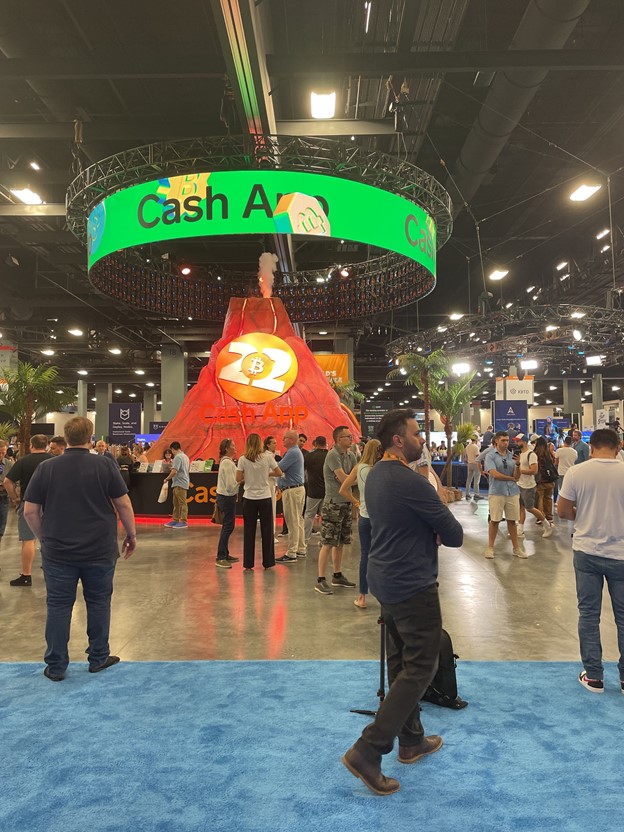
More than 30,000 crypto enthusiasts flocked to Miami for industry’s flagship annual conference
Bitcoin 2022 in Miami was a rousing success as expected, with tens of thousands of crypto enthusiasts and industry luminaries descending on the city for the annual event, and Foresight Ventures was there for every thrilling moment as an event sponsor.
Foresight Ventures had a number of goals it set out to achieve during the conference, including forming new partnerships and playing a part in guiding the next generation of Web3 companies toward success. These goals were all met and exceeded, and the firm has advanced a number of its biggest priorities around finding the next major Web3 disruptors.
Foresight Ventures sponsored one of the conference’s most highly anticipated events, Nolcha Shows: NFT Edition, powered by Tron DAO, a one-of-a-kind event featuring extraordinary and diverse artwork presented through creative programming, engaging activities, and captivating entertainment.
Nolcha Shows featured a dizzying array of NFT art, large-scale sculptures, photography, and paintings by artists including Beeple, Yiying Lu, Zevi G, Kfir Moyal, Mateus, Jason Skeldon, Lawrence Leyderman and more. The event also featured a number of launches and NFT marketplaces, including Courtyard, BitKeep, ChainGuardians, and APENFT. During the show, Foresight hosted an investor meetup with Illust Space, Zebec Protocol, Yield App,Bitget, and many others.
Foresight Ventures also sponsored the Grand Ballroom Seatdrop, through which it built partnerships with some of the top Bitcoin projects poised to deliver some of the industry’s most in-depth research reports over the next quarter. The firm connected with Yale Blockchain’s incubator lead and will be running a hackathon with a group of Yale based startups to empower the student developer community.
Last but not least, Foresight Ventures participated in Cheetah Mining’s investor mixer, helping host more than 100 crypto investors across Bitcoin, Layer2, NFT and Metaverse, etc
The massive annual expo is attended by some of the industry’s biggest names, and each day packed with speakers, meetups, and deep-dives gives way to a series of after-parties that continue the celebration late into the night. It was a whirlwind of an event, but Foresight Ventures made some meaningful inroads with industry peers and will have even more partnerships and event sponsorships to announce in the near future.