Crypto Carbon Ratings Institute (CCRI) and Cardano Foundation release MiCA-compliant sustainability indicators for … DisruptionBanking
Source link ]]>
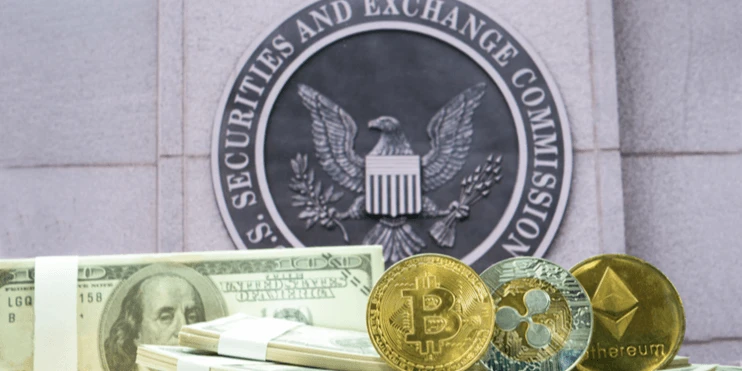
- SEC postpones decision on 7RCC Spot Bitcoin and Carbon Credit Futures ETF to June 24, 2024.
- The ETF plans to invest 80% in Bitcoin and 20% in Carbon Credit Futures-linked financial instruments.
- Gemini has been named custodian for the ETF.
The United States Securities and Exchange Commission (SEC) has announced a delay in its decision regarding the 7RCC Spot Bitcoin and Carbon Credit Futures ETF, a proposed exchange-traded fund focused on carbon credit futures contracts and Bitcoin (BTC).
The delay was announced in a filing made on Thursday and it extends the timeline for the U.S. SEC to evaluate the proposed exchange-traded fund until June 24, 2024.
During the extended timeline, the SEC aims to thoroughly review the proposal before making a final determination, citing the need for sufficient time to consider the potential impacts of the proposed rule change.
The 7RCC Spot Bitcoin and Carbon Credit Futures ETF
The 7RCC Spot Bitcoin and Carbon Credit Futures ETF plans to allocate 80% of its assets to Bitcoin and the remaining 20% to financial instruments linked to Carbon Credit Futures. This unique investment strategy aims to provide investors with a diversified portfolio that encompasses both digital assets and environmental sustainability.
The ETF’s approach is aligned with the evolving landscape of finance, offering a single-trade solution for those seeking exposure to both innovative technologies and progressive environmental initiatives. Gemini, a leading crypto exchange, has been named as the custodian for the ETF, signalling a significant partnership in the burgeoning digital asset space.
The postponement news reflects the ongoing scrutiny and evaluation by regulatory bodies like the SEC in navigating the intersection of traditional finance and emerging technologies.
As the deadline approaches, stakeholders eagerly await the SEC’s decision, which will have implications for the future of investment opportunities in both the digital asset and environmental sectors.
With Asia-Pacific responsible for over half the world’s CO2 emissions, the urgent call for a local carbon registry was resounding. Answering this, Carbonbase, partnering with the HBAR Foundation and ImpactX, has unveiled the Global Climate Registry (GCR). This digital platform promises to reshape the landscape of carbon credit tracking and emissions reduction.
Hedera Hashgraph Network Empowers GCR
Built on the Hedera Hashgraph network, the GCR ensures enhanced transparency. Additionally, it offers slight to medium developers a chance to shine and corporate buyers a clear view into their carbon credit investments.
Max Song, the visionary behind Carbonbase, voiced his excitement.
“By leveraging the strength of both Hedera’s network and ImpactX’s innovative approach, we’re forging ahead into a new era for the carbon market,” said Song. Hence, this collaboration sets the stage for transformative changes in the climate-tech sector.
GCR Adheres to IEEE Standards
Moreover, the GCR’s standards align with the prestigious Institute of Electrical and Electronics Engineers (IEEE). Consequently, this adherence guarantees the credibility of climate impact reporting, a critical factor in today’s eco-conscious world. Kartik Kulkarni of IEEE commended the joint effort, recognizing its potential for fostering cost-effective, high-impact climate initiatives.
@carbonbaseco has partnered with the @HBAR_Foundation and ImpactX to Launch Asia’s First Digital Carbon Registry
“We believe in a future where the balance sheet of our planet lives on a public ledger… We’re excited to see Carbonbase and ImpactX adopt the #Hedera Guardian… pic.twitter.com/jkmfEtXBXq
— Hedera (@hedera) August 28, 2023

Wes Geisenberger of the HBAR Foundation highlighted GCR’s unique proposition. “Imagine a world where our planet’s ledger is public and transparent. That’s the revolution GCR brings to the table,” he remarked. Furthermore, Karen Robbins from ImpactX reiterated the importance of a seamless digital experience for carbon credit developers and buyers.
The GCR’s release symbolizes a more sustainable future, which is more than a technical achievement. By creating this database, the Asia-Pacific region will be better positioned to significantly lead the international effort to combat climate change.

The presented content may include the personal opinion of the author and is subject to market condition. Do your market research before investing in cryptocurrencies. The author or the publication does not hold any responsibility for your personal financial loss.
EMURGO Africa Invests USD 250K in Changeblock, a Pioneering Carbon Market Technology Startup Yahoo Finance
Source link ]]>
The Partnership Enabling Unique Carbon Asset IDs on Cardano Clayton County Register
Source link ]]>
Dogecoin (DOGE) Becomes Third-Fastest Crypto at Decreasing Carbon Emissions, Slashing CO2 by 25% in 2022: R… The Daily Hodl
Source link ]]>
Energy-Efficient Cryptocurrency: Presale Crypto Big Eyes Coin, Cardano and Solana Reduce Carbon Footprint | Bitcoinist
Source link ]]>
Research shows that Dogecoin (DOGE) was the only memecoin in 2022 to proactively reduce its carbon footprint — a key metric for mainstream adoption — by 25% in one year, thanks to the intervention of developers and Tesla CEO Elon Musk.
One of the main reasons why Musk backtracked on accepting Bitcoin (BTC) payments for Tesla was high carbon emissions. At the time, he believed that Dogecoin — “even though it was created as a silly joke” — was better suited for transactions.
Working with Doge devs to improve system transaction efficiency. Potentially promising.
— Elon Musk (@elonmusk) May 13, 2021
Owing to proactive efforts from Musk and the members of the Dogecoin ecosystem, Dogecoin saw a 25% decrease in its annual CO2 emissions. With 1,423 tons of emissions released in 2021, Dogecoin produced 1,063 tons in 2022, according to research from Forex Suggest.

While Ethereum experienced the biggest reduction in CO2 emissions in 2022 after transitioning to a proof-of-stake consensus mechanism, its annual emission eclipsed Dogecoin by 8.3 times.
Reduced carbon footprint and large community support positions Dogecoin as a viable financial instrument in 2023.
Related: The real-life dog behind memecoin DOGE is seriously ill
When it comes to year-long price performance amid the 2022 bear market, DOGE held up much better than most of the top assets on the crypto market.
The memecoin emerged as the third-best performer in the top 10 list after XRP (XRP) and BNB (BNB). DOGE also outperformed its biggest competitor, Shiba Inu (SHIB), with the SHIB community focusing on building a layer-2 network and developing metaverse and blockchain games.

- Dogecoin cuts down on carbon emissions by 25%, after Elon Musk’s collaboration with Doge developers to heighten sustainability.
- Dogecoin’s price is bound to react positively in the future, as crypto investors prioritize sustainable energy.
A recent report has revealed that the popular memecoin Dogecoin (Doge), has emerged as one of the few cryptocurrencies that cut down on its carbon emissions significantly.
According to data from forexsuggest, Dogecoin managed to reduce its carbon footprint by 25% in 2022. All credits goes to Elon Musk, the CEO of Tesla, who is also a well-known Dogecoin proponent over the years.
Musk, who on different occasions, had branded Dogecoin one of the market’s most promising assets, took things a step further, as he made his plans towards making Dogecoin a more “transaction efficient” asset known in 2021.
Working with Doge devs to improve system transaction efficiency. Potentially promising.
— Elon Musk (@elonmusk) May 13, 2021
Thanks to the newly implemented improvements, Dogecoin is now one of the most efficient blockchains on the market. The data also revealed that emissions released in 2021 totaled 1,423, but later declined to 1,063 as of 2022. In the years ahead, we might also continue to see Dogecoin Blockchain record a higher decline in carbon emissions.
Notably, Ethereum and Bitcoin Cash also saw carbon emissions drop by -100 percent and -90 percent respectively. While other chains including Bitcoin, Cardano, Ripple, and Litecoin saw a rise in CO2 emissions, totaling 187%.
Will Dogecoin’s reduced Carbon footprints stir up a price rally?
According to a survey from 2021, 49% of investors claimed to be affected by Bitcoin’s impact on the environment, due to its high carbon emission levels.
The survey surfaced not long after Elon Musk disclosed that Tesla was suspending Bitcoin as a payment option due to energy concerns.
Tesla & Bitcoin pic.twitter.com/YSswJmVZhP
— Elon Musk (@elonmusk) May 12, 2021
Musk would later endorse Dogecoin as a more sustainable option for carrying out transactions. “…The total transaction flow that you do with Dogecoin, like transactions per day, has much higher potential than Bitcoin.” Musk remarked back in 2021.
With Dogecoin’s carbon footprints decreasing by 25 percent, while also being primed for continuous decline in the years to come, Dogecoin presents itself as a more attractive option for investors prioritizing clean energy.
Given that adoption could increase for this reason, Dogecoin’s price might be impacted positively in the future.
No spam, no lies, only insights. You can unsubscribe at any time.
It also bears mentioning that Dogecoin might become one of the first cryptocurrency methods integrated into Twitter.
Although shortly after acquiring Twitter, Musk explained that he will be stepping down as the CEO of Twitter, he disclosed that cryptocurrencies might be accepted on the platform in the future. As Musk remains bullish on Dogecoin, the possibility that the memecoin debuts on Twitter is still high.
Crypto News Flash does not endorse and is not responsible for or liable for any content, accuracy, quality, advertising, products, or other materials on this page. Readers should do their own research before taking any actions related to cryptocurrencies. Crypto News Flash is not responsible, directly or indirectly, for any damage or loss caused or alleged to be caused by or in connection with the use of or reliance on any content, goods, or services mentioned.

As a result of the coordinated efforts of chain developers and billionaire Elon Musk, the annual carbon emissions of Dogecoin decreased by around a quarter in 2022, making the meme token one of the quickest crypto assets at reducing carbon discharge.
According to a recent research by foreign currency data aggregator Forex Suggest, Dogecoin is currently the third-fastest digital asset in terms of reducing its carbon footprint, having slashed its emissions by 25% in 2022. In 2022, the blockchain emitted 1,063 tons of CO2, compared to 1,421 tons in the previous year.
While Ethereum saw the largest drop in CO2 emissions in 2022 after switching to a proof-of-stake consensus mechanism, its annual emission was 8.3 times that of Dogecoin.
The Dogecoin network’s yearly electricity consumption decreased to 1,416,731 kWh in 2018 from 1,897,990 kWh in 2021, according to statistics from Forex Suggest, which has evaluated the global impact of crypto trading on carbon emissions.
Dogecoin And Elon Musk Team Up
Musk stated in May 2021 that he was working with Dogecoin developers to increase the system’s transaction processing efficiency.
During that period, Dogecoin powered 10,544,431 transactions, using 0.12000 kilowatt-hours (KWH) of energy every transaction, whereas in 2022, it powered 11,806,084 transactions without requiring a single KWH per transaction.
Elon Musk and Dogecoin. Image: Getty Images
Musk also said in 2021 that his electric vehicle company, Tesla, will cease accepting Bitcoin (BTC) payments, citing environmental issues linked with Bitcoin mining.
In addition, he suggested in December 2021 that Dogecoin is a preferable payment alternative than BTC. The next day, he announced that Tesla will begin taking DOGE for merchandise purchases.
Forbes lists Musk as the wealthiest individual in the world, with a net worth of almost $120 billion. Musk cofounded the rocket manufacturer SpaceX.
Image: Black Enterprise
Bitcoin Cash (BCH), a hard fork of BTC, is the second crypto currency that is exceeding Dogecoin in terms of how quickly it reduces the environmental impact.
Bitcoin was followed in terms of carbon emissions by Polygon and BCH. BCH uses 18.96 kWh every transaction, while Polygon uses 90.18 kWh per transaction.
On Global Adoption & Goin Green
Dogecoin is a digital currency that was invented as a “joke” by software engineers Billy Markus and Jackson Palmer.
In its early years, the meme currency has not seen many technological updates. Among prominent meme currencies, it is the sole proof-of-work (PoW) blockchain.
DOGE total market cap at $11.6 billion on the weekend chart | Chart: TradingView.com
As of the time of writing, DOGE is trading at $0.0871, up 3.5% over the past week, according to data provided by Coingecko.
Meanwhile, several major organizations that have criticized cryptocurrencies have highlighted the energy-intensive nature of crypto transactions and mining as a contributing factor to the indifference.
As cryptocurrencies become more sustainable, global use is projected to increase.
Featured image by Geographical Magazine