Key facts: Novogratz calls for Cardano utility; Hoskinson denies ADA sale claims TradingView — Track All Markets
Source link ]]>
Cardano’s Hoskinson Denies Dumping ADA At $3 Amid 88% Correction From All-Time High ZyCrypto
Source link ]]>
Cardano’s Hoskinson Denies Dumping ADA At $3 Amid 88% Correction From All-Time High TradingView — Track All Markets
Source link ]]>

The XRP price is crashing following reports that the United States (US) Securities and Exchange Commission (SEC) has temporarily denied applications for XRP ETFs. The postponed rulings continue to add to investor uncertainty, with the regulator setting the next key dates for October 2025.
US SEC Delays XRP ETF Decision Timelines
The US SEC has once again put a pause on decisions surrounding all 5 pending Spot XRP ETFs. According to statements published on the regulator’s official website, the commission has extended its review period for XRP ETF filings from CoinShares, Bitwise, Grayscale, 21Shares, and Canary.
The earliest revised deadline falls on October 18, 2025, for NYSE’s Arca’s Grayscale XRP Trust. Section 19 (b)(2) of the Securities Act of 1934 sets a 180-day statutory review period. Since Grayscale filed its Federal Register notice on February 20, the initial deadline would have been on August 19. However, the Commission exercised its authority to extend the decision window by an additional 60 days for a more thorough evaluation.
Furthermore, the SEC is slated to make a decision regarding Cboe BZX’s 21Shares Core XRP Trust on October 19. The original 180-day review from the February 21 notice would have ended on August 20. CoinShares’ filing has also been pushed back. Nasdaq had filed the proposal on February 7, 2025, seeking approval to list and trade shares of the CoinShares XRP ETF.
For this ETF, the previous 180-day window would have concluded on August 24, 2025. However, the Commission determined that additional time was necessary to fully assess the proposal. As a result, the regulatory agency designated October 23, 2025, as the new date by which it will either approve or disapprove the XRP ETF filing.
Other XRP ETF proposals facing delays include Bitwise’s filing at Cboe BZX, now scheduled for October 20. Meanwhile, Cboe BZX’s Canary’s XRP Trust Share review deadline is set for October 24, closely aligning with CoinShares’ application.
XRP Price Crashes Amid ETF Delays
Following the SEC’s decision to delay XRP ETF approvals, the XRP price experienced a sharp decline, reflecting mounting market uncertainty. CoinMarketCap’s data shows that XRP‘s value has fallen to $2.89, at the time of writing, marking a 3.82% drop within 24 hours and a 10.84% decline over the past week.
Crypto analyst Ripple Van Winkle shared insights on the XRP price crash in a recent X social media post. He emphasized that XRP is now trading below the psychological $3 support level, plunging 5.4% in under a day and recording its largest single-day loss since July. Additionally, he noted that while retail traders panicked and sold, institutional investors seized the opportunity to accumulate, purchasing $3.8 billion worth of XRP.
Currently, technical indicators point to a symmetrical triangle formation, suggesting that XRP’s next significant move hinges on whether it can surpass the $3.26 breakout zone to reach $3.9. According to the market expert, failing to break past this zone could drive the cryptocurrency below $2.96. Key resistance levels remain between $3.08 and $3.14, and unless bulls reclaim this resistance range, sellers are likely to stay in control.
Featured image from Getty Images, chart from Tradingview.com
Editorial Process for bitcoinist is centered on delivering thoroughly researched, accurate, and unbiased content. We uphold strict sourcing standards, and each page undergoes diligent review by our team of top technology experts and seasoned editors. This process ensures the integrity, relevance, and value of our content for our readers.
Cardano Founder Denies Misuse of $600 Million in ADA Tokens AInvest
Source link ]]>
Massive Blow to Ripple as Judge Denies Key Motion, Metaplanet’s Holdings Top 12,000 BTC, Shiba Inu Price Just Got 66.3 Trillion Reasons to Not Add Zero: Crypto News Digest by U.Today U.Today
Source link ]]>
Cardano’s Hoskinson denies ADA misappropriation allegations, calls them deeply personal and damaging CryptoSlate
Source link ]]>
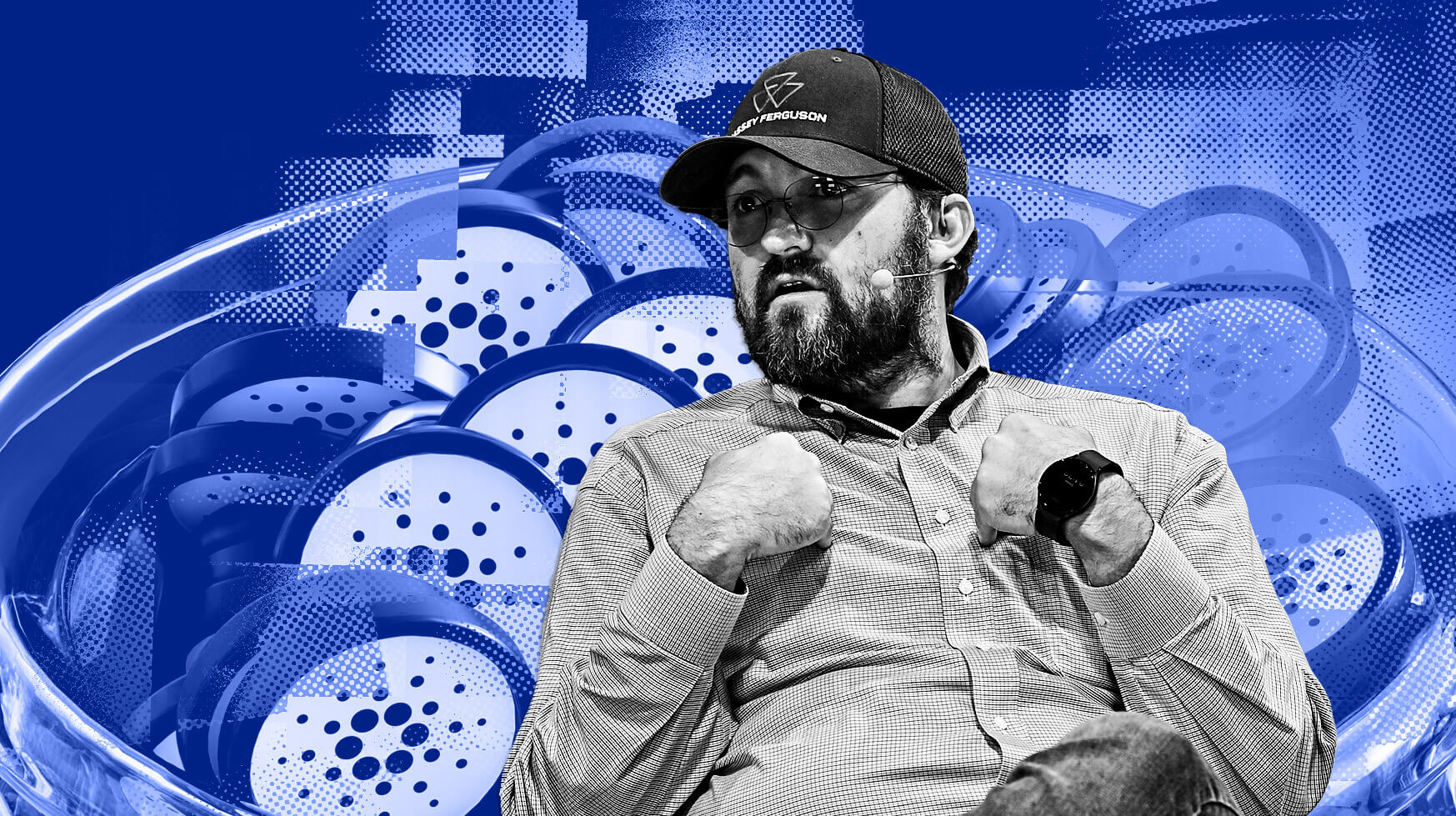
Cardano founder Charles Hoskinson expanded his response to allegations that Input Output Global (IOG) misappropriated over 318 million ADA from unredeemed pre-sale wallets, calling the situation deeply personal and damaging.
In a May 18 post on X, Hoskinson reflected on the reputational toll of the allegations, noting that the incident has reshaped his view of his relationship with the Cardano community.
He added:
“For a decade, I’ve been on the front lines. To not be given the benefit of the doubt here without strong evidence to the contrary means I don’t have the connection I thought with some people.”
Hoskinson added that following the release of an external audit, he intends to hand control of his social media account to a media team and scale back his direct engagement.
Legal pushback and audit plans
Hoskinson first responded to the allegations on May 7, saying that IOG may pursue legal action against those accusing him of redirecting unclaimed ADA from Cardano’s 2017 Token Generation Event.
According to a social media thread by X user Masato Alexander, a December 2020 protocol update introduced a function that reassigned ADA from unredeemed UTxOs to Cardano’s reserves.
Alexander alleged that the subsequent Move Instantaneous Rewards (MIR) transaction diverted these funds without transparency or notification to the original voucher holders.
Hoskinson countered that investors redeemed 99.8% of ADA vouchers. The remaining 0.2%, recovered under protocol rules after a seven-year window, was donated to Intersect, the Cardano industry coordination body.
He added that an externally audited report would soon document the redemption history and crowdsale process. Hoskinson also said he would “send letters to the relevant parties demanding retractions and apologies.”
Alexander disputed the claim, citing a public statement by Intersect’s interim executive director that it received only $7 million in 2024, far less than the estimated $600 million value of the disputed ADA. He also criticized the lack of a detailed audit publicly tracing the fund flows.
Foundation and Emurgo address governance process
On May 19, the Cardano Foundation issued a statement distancing itself from the operational aspects of ADA voucher redemption after 2021. The statement added that while it received general updates, it did not provide detailed accounting.
The foundation stated:
“The effort to locate and support remaining voucher holders has been led by the IO team over the past four years.”
The foundation welcomed IOG’s pledge to release a third-party audit and recommended that it include all MIR transactions, balances, and any returns generated during fund administration.
Cardano’s commercial arm, Emurgo, also defended IOG’s efforts in a May 19 post. It said the seven-year redemption process involved multiple campaigns, third-party investigations in Japan, and Know Your Customer (KYC) verification.
Emurgo acknowledged:
“While the vast majority of the pre-sale ADA vouchers have been successfully redeemed, there was a small percentage that had gone unredeemed.”
The company added that the Shelley hard fork would have rendered unredeemed ADA unspendable, necessitating their movement to enable further redemptions.
The firm also expressed concern over “excessive, unwarranted FUD,” saying accusations based on limited facts caused unnecessary harm to the ecosystem. It echoed IOG’s call for an audit and urged the community to remain patient.
Mentioned in this article
Cardano Founder Denies Claims of ADA Fund Misuse Amid Legal Threats Cryptodnes.bg
Source link ]]>
Cardano Founder Denies $619 Million ICO Misconduct Bitcoinist.com
Source link ]]>