Terraform Labs (TFL) and co-founder Do Kwon have moved Bitcoin and other crypto assets worth millions in the last few months. The remaining 5,292 Bitcoins linked to the Luna Foundation Guard (LFG) and Do Kwon also moved to another crypto wallet earlier this week, reported South Korean news media on July 5.
All Bitcoin Withdrawn From Wallet Belonging To Do Kwon and LFG
Someone moved all 5,292 BTC worth $163 million from a Binance wallet of the Luna Foundation (LFG) to an unknown wallet on Monday, reported South Korean media that claims to tracking wallets belonging to TFL, LFG, and Do Kwon.
The US Securities and Exchange Commission (SEC) said Do Kwon and TFL secretly transferred 10,000 BTC to a cold wallet after the Terra-LUNA crisis. Do Kwon continue to transfer Bitcoin from the cold wallet to crypto bank Sygnum and cashed out millions until now.
The latest transfer happened from the LFG crypto wallet which was opened in January 2021. According to on-chain data, 5292 BTC in the LFG wallet was deposited into an unknown wallet.
Also Read: Twitter CEO Officially Discloses Reasons For “Rate Limits” And Other Policy Changes
Other Withdrawals by Terra Founder and TFL
Terra co-founder Do Kwon and TFL have withdrawn Bitcoin and other crypto assets worth millions during court proceedings in Montenegro. Terraform Labs transferred 1.8 million Convex Finance (CVX) tokens worth nearly $8.7 million.
Meanwhile, stablecoins worth $400,000 and Terra Classic (LUNC) worth $150,000 were withdrawn from wallets reportedly managed by Terra co-founder Do Kwon to a separate wallet in May. South Korean prosecutors claimed Terra co-founder or an affiliate transferred crypto assets worth $29 million since his arrest.
CoinGape earlier reported that Terra co-founder Do Kwon exchanged Bitcoin worth $190K from the Luna Foundation Guard for cash in Serbia.
Last month, Swiss prosecutors froze crypto assets and fiat currency related to Terraform Labs and co-founder Do Kwon in Sygnum at the request of the New York Federal Prosecutors Office and the US Securities and Exchange Commission (SEC).
Also Read: Financial Authorities Prepare For Crypto Asset Regulation

AD

The presented content may include the personal opinion of the author and is subject to market condition. Do your market research before investing in cryptocurrencies. The author or the publication does not hold any responsibility for your personal financial loss.
Crypto News: The arrest of Terraform Labs Co-founder Do Kwon in Montenegro is unraveling interesting wherabouts from behind the scenes of the collapse almost 10 months later. According to latest reports, concrete proof is emerging to believe that Kwon knew beforehand about the collapse of the network. The incident wiped out billions of dollars worth value and investor money from the crypto market over a crisis that dragged for several months in 2022. In fact, the Terra co-founder appears to have anticipated legal issues surrounding the shock collapse.
Also Read: Elon Musk Plans To Take On Google’s Bard & ChatGPT With New AI Startup
Following his arrest in Montenegro, authorities of South Korea and United States are seeking Kwon’s extradition. He was arrested on March 23, 2023 in Podgorica, Montenegro.
Do Kwon Transferred Funds Before Terra Collapse

According to a Bloomberg report, Kwon sent around $7 million to a reputed South Korean law firm before the Terra collapse unfolded on May 9, 2022, erasing almost $500 billion from the crypto market. This could be a huge revelation that could aide in the investigation, as money transfer to lawyers just before the collapse suggests he was well aware of it. In fact, the lawyers from Kim & Chang were on a trip to Montenegro recently to meet with Kwon and Terraform former chief financial officer, Han Chang-joon, the report said.
The Terra founder is facing charges of orchestrating a cryptocurrency fraud both in the US as well as South Korea. Also, investigators would be looking at the source of the funds he transferred to the law firm.
Also Read: This SEC Commissioner Wants To Redefine ‘Exchange’; Will It Save Crypto In US?

The presented content may include the personal opinion of the author and is subject to market condition. Do your market research before investing in cryptocurrencies. The author or the publication does not hold any responsibility for your personal financial loss.
Do Kwon, the chief executive officer of Terraform Labs, was finally arrested on Thursday in Podgorica, Montenegro. Referring to Kwon as most wanted fugitives and South Korea National, the Montenegrin police said they detained someone who is suspected as the Terraform Labs CEO. Authorities in various jurisdictions across the world have been on the look out for Kwon over the last few months. The Terra network collapse in mid-2022 led to a massive loss of investor money as the ripple effect spread widespread in the crypto market.
Also Read: Jack Dorsey’s Block (SQ) Crashes 20% As Hindenburg Report Accuses Of Fraud
Do Kwon Arrest
According to a statement by the Interior Minister of Montenegro, Kwon was detained at the Podgorica airport. A translation of the minister’s statement said,
“Montenegrin police have detained a person suspected of being one of the most wanted fugitives, South Korean citizen Do Kwon, co-founder and CEO of Singapore-based Terraform Labs.”
It may be recalled that the Terraform Labs CEO last year said he was not “on the run.” He made the comments in September 2022 in response to reports that said otherwise. Kwon said at the time that he was in full cooperation with the government agencies.

Also Read: Crypto Insider: Another 270% Bitcoin Price Rally Possible in 2023 With New ATH
SEC Action On Kwon
In February 2023, the U.S. Securities and Exchange Commission (SEC) filed with a U.S. federal court in Manhattan accusing the Terra LUNA creator of “of orchestrating a $40 billion securities fraud involving LUNA and Terra’s algorithmic stablecoin TerraUSD (UST).” SEC Chair Gary Gensler said that Kwon failed to provide investors with complete information for ‘crypto asset securities’ LUNA and Terra USD. Gensler added that Terraform and Kwon committed fraud by repeating false and misleading statements before causing devastating losses for investors.
Meanwhile, the Terra LUNA price fell sharply in response to the news of Do Kwon arrest.
The presented content may include the personal opinion of the author and is subject to market condition. Do your market research before investing in cryptocurrencies. The author or the publication does not hold any responsibility for your personal financial loss.
The hunt for Terra founder Do Kwon has been ongoing for months now since the network collapsed. South Korean authorities continue their search and have already gone as far as invalidating Kwon’s passport but he continues to be elusive. This time around, authorities believe that they may have located where the founder is currently hiding and are reportedly working with the Serbian government to get him back to South Korea.
Do Kwon Is In Serbia?
The South Korean prosecutors have seemingly been following Do Kwon around the world. Previously, authorities had said that they believed that Kwon was in Dubai. However, they now believe that the Terra founder made his way to Serbia from Dubai last month.
Kwon currently has a red notice him issued by Interpol, making him one of the most wanted people on the planet. But there is no record of the founder actually entering Serbia given that his passport is currently invalid. Furthermore, authorities are also looking at the possibility that Kwon could have moved on from Serbia and could be hiding out in one of the neighboring countries.
Nevertheless, South Korean authorities remain steadfast in their pursuit of the Terraform Labs (TFL) founder. Reports say the statute of limitations was suspended by the Seoul Southern District Prosecutor’s Office in Do Kwon’s case because it believes that the founder had fled the country earlier in the year for the sole purpose of avoiding any investigation into his involvement with the Terra collapse.
South Korean officials are reportedly in the process of working with the Serbian government to work out an extradition deal since there is no extradition treaty between the two countries. However, both countries are in agreement with the European Convention on Extradition.
LUNC price at $0.00016 | Source: LUNCUSD on TradingView.com
Terra Founder Comes For FTX
With the collapse of the FTX crypto exchange, there have been many shocking developments and one of those is the fact that founder Sam Bankman-Fried is being investigated for market manipulation. After the news broke, Do Kwon took to Twitter to share his thoughts on this.
In a multiple-tweet thread, the Terra founder accuses FTX’s sister company Alameda of starting the UST currency contraction that would eventually lead to the collapse of the network. According to Kwon, Alameda had drained UST’s curve pools by selling off 500 million UST in a matter of minutes.
This is fairly public knowledge at this point, but the large currency contraction that UST went through in Feb 2021 was started by Alameda, when they sold 500mm UST in minutes to drain its curve pools during the MIM crisis
— Do Kwon
(@stablekwon) December 8, 2022
It remains to be seen if Kwon’s accusation of Alameda actually has any merit to it. However, the Terra founder ends his Twitter thread with “What’s done in darkness will come to light.” Kwon has also maintained throughout the months that he is not on the run, even though South Korean authorities say he is. He currently has an active arrest warrant out on him in his home country.
The biggest news in the cryptoverse for Dec. 7 includes U.S. banking committee arguing SBF ‘must answer ‘ for FTX, Do Kwon questions SBF involvement in Terra collapse, Celsius gives hopes of withdrawals, EthereumMAX lawsuit thrown out, and more.
CryptoSlate Top Stories
The US senate banking committee in a Dec. 7 letter to Sam Bankman-Fried said he must answer for the failure of his crypto firms in a hearing scheduled for Dec. 14.
The committee chairman Sherrod Brown wrote that if SBF failed to honor the invitation, he would be issued a subpoena.
Senator Brown highlighted that SBF’s position at FTX Trading Ltd and Alameda Research makes it necessary for him to testify and answer for the failure of both companies.
Terra founder Do Kwon questioned if Genesis Trading provided $1 billion UST to Sam Bankman-Fried and Alameda as “ammo for a peg attack.”
In a Dec. 8 twitter thread, Kwon asked whether Genesis Trading bought $1 billion UST from Luna Foundation Guard because it had an “interest to participate in the Terra DeFi ecosystem.” However, he believes that the lender gave these USTs to Alameda to fund the peg attack.
The Republic of El Salvador has announced that it has completed the second repurchase of its sovereign bonds maturing in 2023 and 2025.
According to a press release shared by President Nayib Bukele, the country purchased $74 million worth of government bonds on Dec. 8.
Celsius discussed the reopening of withdrawals for certain customers during its latest hearing on Dec. 7.
The Court authorized the return of “pure” and “transferred” Custody Account assets below a specific legal threshold, as well as digital assets not supported on the platform.
USDC stablecoin could get indirect access to the Federal Reserve’s risk-free liability, as its partner BlackRock is set to apply for the Fed’s reserve repo (RRP) program.
Circle CFO Jeremy Fox-Geen recently announced that the stablecoin issuer had started investing in the Circle Reserve Fund.
The Circle Reserve Fund is managed by BlackRock, which qualifies Circle as an indirect investor in the government money market fund. The reserve will comprise 20% cash held at the Bank of New York Mellon, and 90% short-term U.S. Treasuries.
Californian District Judge Michael Fitzgerald threw out a lawsuit filed against Kim Kardashian and Floyd Mayweather Jr., stating that it was unclear whether the plaintiffs had seen EthereumMax promotional material from the celebrities.
In early October, Kardashian had agreed to a $1.26 million settlement with the U.S. Securities and Exchange Commission (SEC) over allegations she had promoted the EMAX token to her Instagram followers without disclosing it as a paid advert.
Research Highlight
Looking at Bitcoin and Ethereum derivatives shows that they have been affected by the FTX fallout, with data analyzed by CryptoSlate showing that over 160,000 BTC has been unwound since the beginning of October.
This data indicates that roughly $3 billion worth of futures contracts has been closed out in two months.
Cryptocurrency derivatives are an important indicator of the overall health of the market. They also serve as a pointer as to where prices might head next, as they show the amount of leverage the market is sitting on.
The open interest on Bitcoin futures shows a sharp decline in the number of funds allocated to open futures contracts, which is now back to levels recorded in July 2022.
Crypto Market
In the last 24 hours, Bitcoin (BTC) increased by +0.33% to trade at $17,001, while Ethereum (ETH) increased by +1.11% to trade at $1,288.
Biggest Gainers (24h)
Biggest Losers (24h)

The biggest news in the cryptoverse for Nov. 4 includes Bitcoin’s outperformance of Nasdaq after the Fed raised interest rates, Do Kwon’s invitation to all law enforcement in the world to join an online conference, and DOGE’s 9% fall amid Twitter’s class-action lawsuit.
CryptoSlate Top Stories
Bitcoin outperformed NASDAQ after Fed raised rates by 0.75%
NASDAQ and Gold prices reacted to the Fed’s latest 0.75% interest rate hike by sinking, while Bitcoin (BTC) performed better than both and recorded a spike.
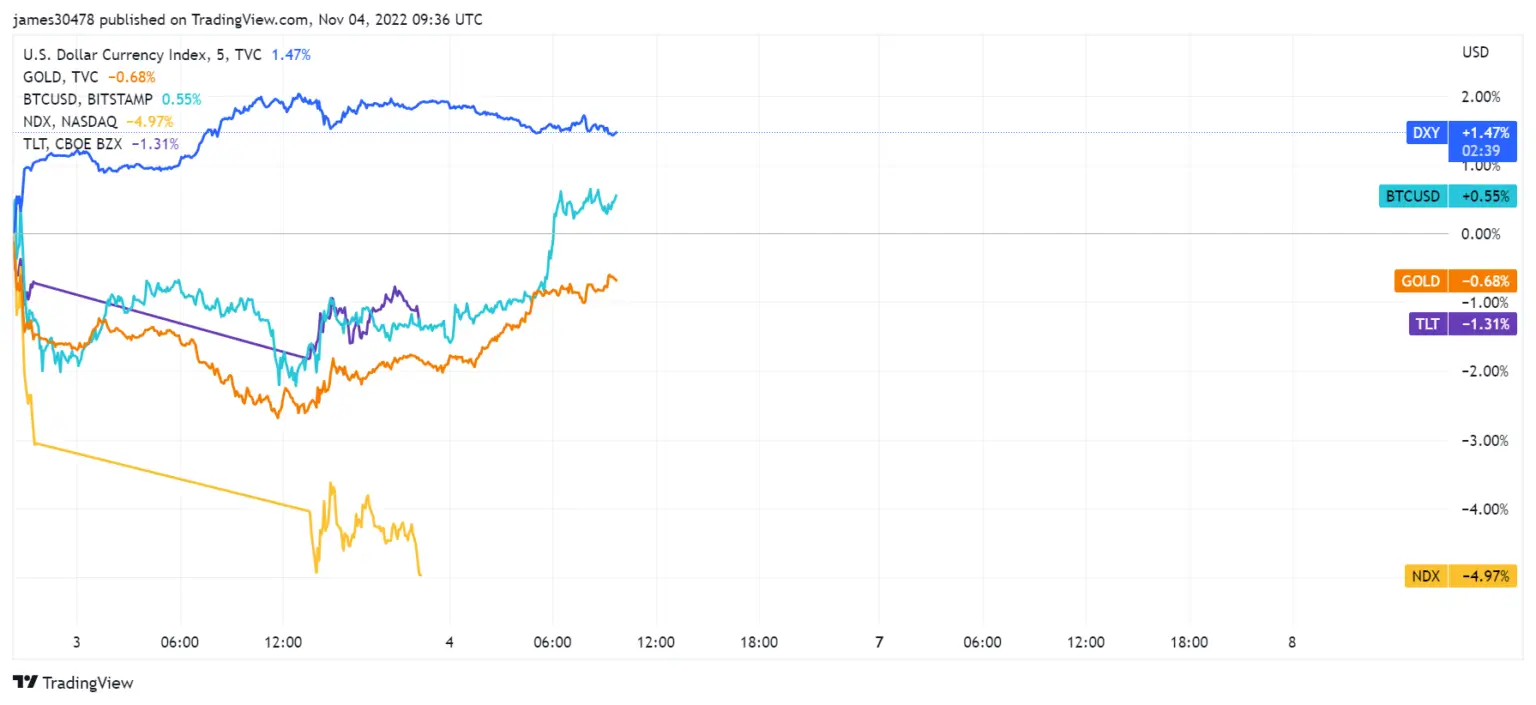
NASDAQ and Gold fell by 4.79% and 0.68%, respectively. In the meantime, Bitcoin increased by 0.55%.
Terra Do Kwon wants to invite the police for a conference
On Nov.3, Korean prosecutors claimed that they obtained a private conversation between Do Kwon and one of his employees, proving that Kwon purposely manipulated the Terra (LUNA) price. The prosecutor’s office also said that the conversation proved Kwon was an illegal immigrant in Europe.
On Nov.4, Kwon Tweeted to say that he’d hold a virtual conference to end all talks of him being in hiding.
Alright ill throw a meetup/conference soon to get over this in hiding bs
Cops from world over welcome to attend
— Do Kwon
Kwon didn’t disclose a date for the virtual conference but invited all law enforcement worldwide to join.
Twitter facing lawsuit over staff layoffs, Dogecoin sinks 9%
After Elon Musk took over Twitter, he announced that he was planning to cut 50% of its workforce, which implies that he’ll fire 3,700 people. Twitter is now facing a class-action lawsuit over this, as the employers took legal action on Nov. 4.
Musk’s favorite Dogecoin (DOGE) reacted to this news by falling 9% in the last 24 hours.
Bitcoin mining difficulty expected to spike Nov. 6, increase pressure on miners
Bitcoin mining difficulty will adjust on Sunday, Nov. 6. and it is expected to increase to record a new all-time-high third time in a row.
CryptoSlate analysts examined the mining difficulty and hash rate data and realized that bitcoin difficulty recorded a slight decrease on Nov. 4 while the hash rate kept increasing.
This indicates that the pressure on miners hasn’t been relieved and that the mining difficulty will likely increase this Sunday.
More entities back Ripple as SEC seeks extension
Ripple (XRP) and the Securities and Exchange Commission (SEC) have been involved in a lawsuit since 2019.
Since then, a total of 12 companies have filed amicus briefs to support Ripple’s standing. Ripple’s general counsel, Stuart Alderoty, said:
“A dozen independent voices – companies, developers, exchanges, public interest and trade assoc.’s, retail holders – all filing in SEC v Ripple to explain how dangerously wrong the SEC is. The SEC’s response? We need more time, not to listen or engage, but to blindly bulldoze on.”
Canada launches consultations on crypto, stablecoins, CBDCs
The Canadian government announced launching a consultation service on all crypto-related topics, including stablecoins and Central Bank Digital Currencies (CBDC).
The consultations will address illicit crypto activities and provide a legislative review of the digitalization of money.
Mempool Studio launch presale for web3 yearbook, almanac
Mempol Studio is collecting milestone events of the web3 space in a 300-page limited edition hardcover yearbook. The yearbook is called “Web3 Yearbook 2022” and will be launched next year.
Research Highlight
Research: US inflation breaking barriers in the 2020s; started faster than 70s, 80s trend
Inflation in developed economies like Europe and the U.S. is increasing alarmingly, primarily due to the increasing prices of energy, fuel oil, and gasoline.
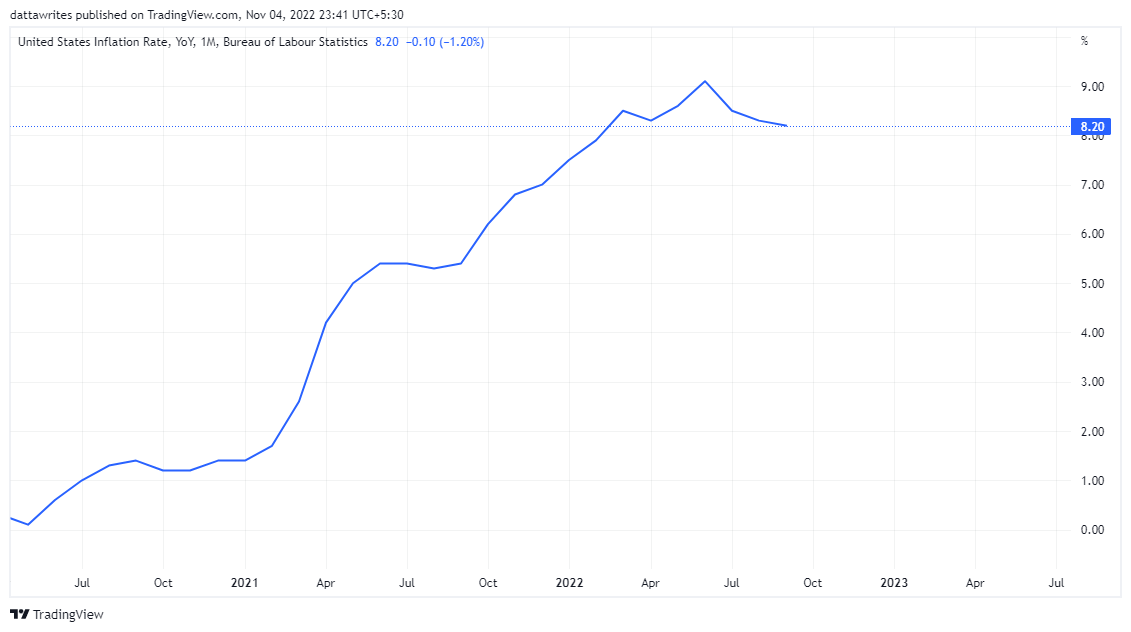
In the U.S., inflation was 7.5% at the beginning of 2022, reaching 9% by June. This is much higher than the 5.4% recorded in June 2021 and 0.6% recorded in June 2020.
On the other hand, Bitcoin has been up by 184.28% since the start of 2020. In the same timeframe, gold only increased by 5.38%, which indicated that Bitcoin was a better hedge for inflation for the past two years.
CryptoSlate Exclusive
Is now a good time to move dollar cost average (DCA) into crypto?
Tokenist’s Chief Editor, Shane Neagle, wrote an exclusive article for CryptoSlate, discussing if this is the right time to dollar-cost average (DCA) in crypto.
DCA is a trading strategy involving buying and selling the same amount of the same asset at regular intervals. It is based on the premise of ignoring short-term price changes and behaving as a hedge against high market volatility. That’s why it is preferred by crypto investors often.
However, Neagle draws attention to the fact that Bitcoin prices are highly exposed to the overall macroeconomic conditions. Therefore, he advises investors should think twice before committing to DCA.
Neagle wrote:
“In an environment where Bitcoin prices remain highly exposed to the overall macroeconomic conditions, investors should seriously consider committing to the dollar-cost averaging approach as a means of investing in digital assets – should strong convictions be prevalent.”
News from around the Cryptoverse
What if Michael Saylor bought Ethereum?
blockchaincenter.net shows what would happen if MicroStategy founder Michael Saylor had bought Ethereum (ETH) instead of Bitcoin.
According to the data at the time of writing, Saylor would profit $1.76 billion if he bought Ethereum instead of losing $1.27 billion.
U.S. millionaire got arrested for facilitating drug exchanges via crypto
A U.S. nacro-millionaire was detained in Canada for using crypto to distribute drugs, according to Montreal Gazette. At the time of his arrest, he possessed around 200,000 Bitcoins, $2 million in an offshore bank account, and $4 million in Canadian Dollars.
Crypto Market
In the last 24 hours, Bitcoin (BTC) increased by +4.05% to reach $21,064, while Ethereum (ETH) also spiked by +6.61% to trade at $1,643.
Biggest Gainers (24h)
Biggest Losers (24h)

The biggest news in the cryptosphere for Sept. 28 includes Charles Hoskinson’s expectations that VCs would invest in Cardano in two years, how an MEV bot gained and lost around $1 million, and Do Kwon and LFG’s denial of transferring $69 million worth of Bitcoin to crypto exchanges KuCoin and OKX.
CryptoSlate Top Stories
Hoskinson anticipates flood of VC money coming for Cardano by 2024
Input Output’s CEO Charles Hoskinson spoke at the Mainnet 2022 event that is taking place in New York. He mentioned that venture capitalists overlook the Cardano (ADA) ecosystem because they chase short-term profits.
With that being said, he added that things are about the change for the Cardano network in two years. He noted that VCs will get involved as the number of dApps increases in the Cardano blockchain. He said:
“Because there is something to invest in, there is something to connect to. So probably 2023, 2024.”
This MEV bot gained and lost over $1M in 1 hour
A Maximal Extractable Value (MEV) bot 0xbaDc0dE was a mempool bot that had been active on the Ethereum (ETH) for a few months. Among the 220,000 transactions it made, one generated a massive arbitrage, providing the bot with an 800 ETH profit.
However, the bot got exploited by a hacker and lost over $1 million, so the winning of the arbitrage lost its point.
Do Kwon, LFG deny cashing out 3313 BTC
Reportedly, South Korean authorities warned crypto exchange platforms KuCoin and OKX to freeze 3313 Bitcoins (BTC) because Terraform Labs founder Do Kwon and The Luna Foundation Guard (LFG) allegedly transferred that amount to their platforms.
The amount equates to roughly $69 million with the current BTC prices. The LFG and Kwon came forward today to deny moving $69 million to KuCoin or OKX.
BIS concludes CBDC pilot with cross-border payments totaling $22M transacted
The Bank for International Settlements (BIS) announced that it successfully completed a pilot Central Bank Digital Currency (CBDC) project that involved four Asian central banks.
The project is called mBridge, referring to Multiple CBDC, or mCBDC. According to the announcement, it has already facilitated $22 million worth of transactions during the pilot period.
Chainlink launches Economics 2.0 staking programs
Chainlink finally announced its staking reward programs, the SCALE and BUILD.
The Sustainable Chainlink Access for Layer 1 and 2 Enablement (SCALE) is a part of Chainlink’s Economics 2.0 project, which aims at enhancing the long-term utility of its oracle services. On the other hand, the BUILD was launched as a component of Chainlink staking targeting early-stage projects.
Klaytn launches gas fee rebate program for Web3 Gamers
Klaytn’s new program will allow web3 gaming companies to build on the Klaytn network to offset gs fees for gamers. This eliminates the necessity of purchasing crypto for gas payments before playing web3 games.
CFTC serves Ooki DAO members lawsuit via governance discussion forum
The Commodity Futures Trading Commission (CFTC) filed a lawsuit against Ooki DAO because the DAO didn’t have:
“Any listed headquarters or physical office location, mailing address, or a listed president, secretary, treasurer, or agent appointed to accept service.”
Ooki DAO hasn’t responded to the case yet.
Parallels drawn between exodus of crypto CEOs and pre-Covid departures
Analysts from Reflexivity Research identified five crypto CEOs who resigned from their positions and asked -who’s next?
Many prominent names from the crypto community responded. While some argued that CEOs are prone to chase cash and that the crypto market was failing to provide it, others pointed at the upcoming regulations and said they frightened the former CEOs.
Research Highlight
British pound drops to all time lows against the dollar
The historically-stable British Pound (GBP) has fallen to its lowest against the U.S. Dollar (USD) on Sept. 28.
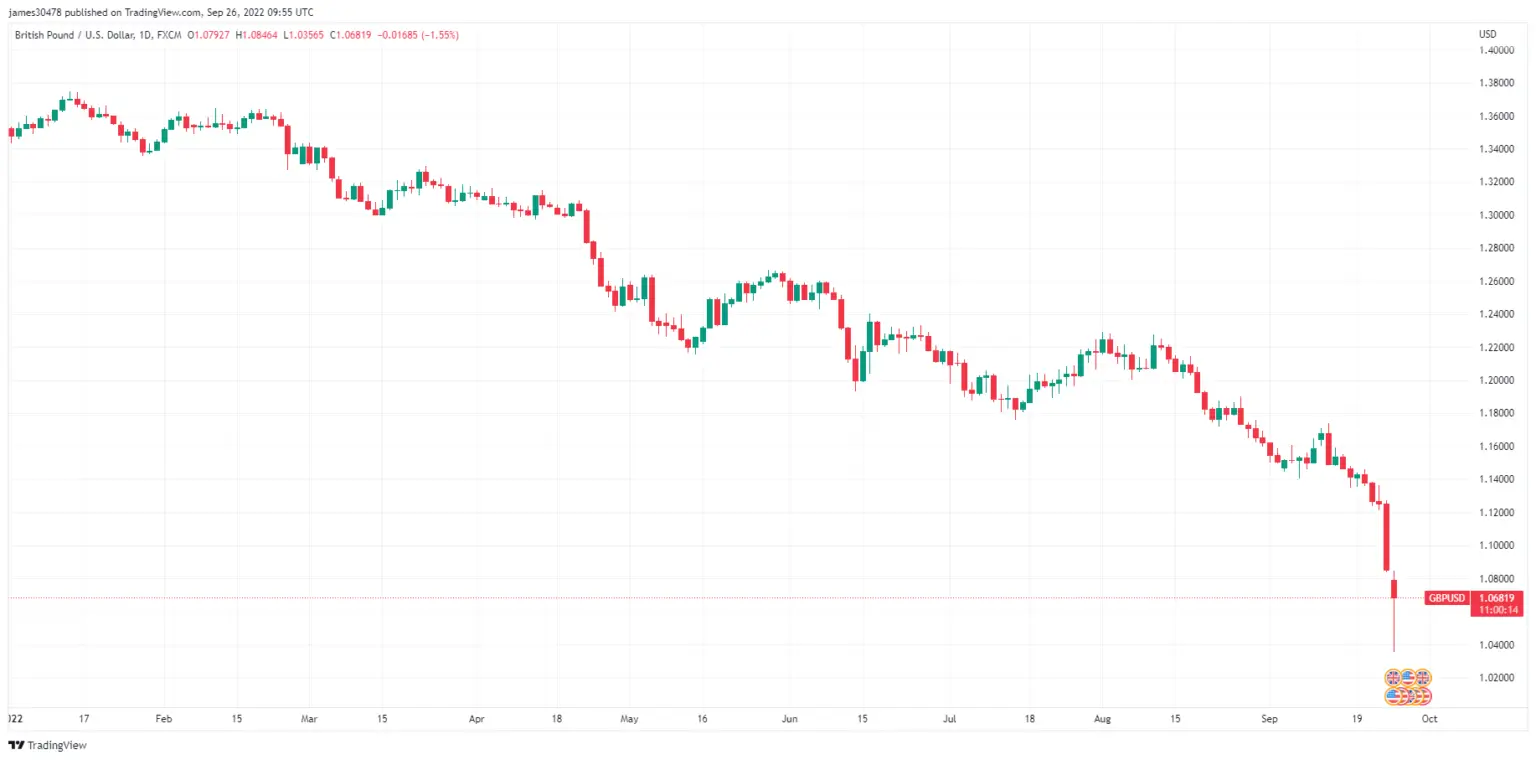
CryptoSlate analysts took a deep dive into the subject to discover that the GBP has been following a downward trend against the USD since the 1990s. The falling of the pound accelerated after the major tank in 2008.
As the pound began to lose its stability, people started to look at other alternatives, such as Bitcoin. On Sept. 26, BTC/GBP trading volume increased by over 1,200%.
News from around the Cryptoverse
Terraform deems South Korea’s Do Kwon arrest warrant ‘unfair’
Terraform Labs described the South Korean prosecutor’s arrest warrant for its CEO Do Kwon as an overreach of their authorities and claimed that Luna was not a security, so South Korea’s capital-markets law did not cover it, The Wall Street Journal reported.
Crypto Market
In the last 24 hours, Bitcoin (BTC) increased by 2.47% to reach $19,541, while Ethereum (ETH) also increased 1.09% to be traded at $1,335.
Biggest Gainers (24h)
Biggest Losers (24h)
Trouble for Do Kwon, Terra co-founder seems to be increasing after Interpol issued Red Notice against him. In the latest hit, South Korean authorities have moved on to deepen their probe against the alleged crypto fugitive. Do Kwon to lose his Bitcoins? According to reports, South Korean prosecutors are moving… Read more
Source link ]]>
Cardano founder Charles Hoskinson has taken a jab at Terra co-founder Do Kwon for insisting he was not on the run and had nothing to hide. The Terra co-founder denied being on the run after the Singaporean police indicated that he was no longer in the country.
https://t.co/v3etbN6FdD pic.twitter.com/RfLglqZ64D
— Charles Hoskinson (@IOHK_Charles) September 27, 2022
All the while, Kwon was thought to be in Singapore until it was proven otherwise. Following the disclosure, Kwon said in tweets that he did not have anything to hide and that he was willing to cooperate with “any government agency.” His exact location, however, remained unknown.
Earlier, South Korea’s court issued an arrest warrant against Kwon, accusing him and other individuals of violating capital-markets law. At the moment, the International Criminal Police Organization (Interpol) has issued a red notice for embattled Terra founder Do Kwon.
Ads
3,313 BTC moved from LFG wallet
Since Sept. 14, roughly 3,313 BTC (or about $66.59 million) were abruptly moved to two crypto exchanges, not long after Terra co-founder Kwon Do-Hyung received an arrest warrant.
Colin Wu reports: “3313BTC in LFG Binance wallet was transferred to Kucoin from September 15th to 18th, and 1959 BTC was transferred to OKX. At the request of the South Korean government, Kucoin froze 1,354 BTC. OKX ignores the freeze request.”
According to Crypto Quant, 3,313 BTC in the LFG (Luna Foundation Guard) Binance wallet were moved to Kucoin between Sept. 15 and 18, and 1,959 BTC to OKX exchange. On each of the two exchanges, deposits were made four to five times.
The transfer was quickly discovered by the merger team, who then requested that Kucoin freeze the transferred 1,354 BTC. OKX allegedly disregarded the prosecution’s demand to freeze assets, on the other hand. The 1,959 BTC that was transferred there may have migrated to another exchange as a result.
The arrest warrant for Terra founder Do Kwon has gained a lot of attention in the cryptocurrency world. Recent occurrences indicate that Kwon is unquestionably on the run, and Interpol is currently trying to find and apprehend him.
The biggest news in the cryptosphere for Sept. 26 includes Interpol’s red warrant requesting law enforcement worldwide to locate and arrest Do Kwon, news of the upcoming ATOM 2.0 update, and crypto miners leaving PoW tokens after the Ethereum Merge.
CryptoSlate Top Stories
Interpol issues worldwide arrest warrant for Do Kwon
After releasing an arrest warrant for Terraform Labs founder Do Kwon, South Korea asked for Interpol’s aid in looking for Kwon on Sept. 19.
Responding to Korea’s request, Interpol released a red notice for Kwon on Sept. 26, mandating law enforcement worldwide to locate and arrest him.
Terra founder Do Kwon claims he is ‘making zero efforts to hide’
Following the news of Interpol issuing a red warrant, Do Kwon tweeted that he is making “zero efforts to hide” and that he “go(es) on walks and malls, no way none of CT hasn’t run into me the past couple weeks.”
Miners flee PoW tokens as token prices tank, GPU value flounders
Crypto miners who initially flocked to GPU-compatible PoW tokens after the Ethereum Merge are leaving those networks after the value of their tokens fell and as the value of GPUs dropped by up to 40% in China since the merge.
Ethereum community split over reversible transactions proposal
The Ethereum community has voiced widely divergent opinions on whether implementing reversible transactions is a step forward.
A significant aspect of cryptocurrency is transaction irreversibility. While proponents of reversible transactions point to improved safety, detractors argue that, under this proposal, Ethereum reflects the banking system it claims to oppose.
ATOM 2.0 whitepaper to be revealed during Cosmoverse, token up 25% in September
Cosmos’s native token ATOM’s upgrade details will be launched on Sept. 26, during the first day of the Cosmoverse in Medellin. The details will be revealed in Cosmos co-founder Sommelier Zaki Manian’s keynote speech titled “$1K ATOM LFG” and a panel discussion on ATOM 2.0.
Komodo’s AtomicDEX bridge will now connect Cosmos to hundreds of blockchains
Komodo’s (KMD) integration with Cosmos on AtomicDEX was completed on Sept. 26. The integration leverages AtomicDEX’s cross-chain protocol, non-custodial wallet, and DEX to connect the Cosmos ecosystem to other blockchains.
China arrests 93 people suspected of laundering 40B RMB via crypto
Chinese authorities detained 93 people for allegedly being involved in a money laundering operation. According to local news sources, a group of criminals attempted to launder 40 billion RMB using cryptocurrencies. Authorities were able to seize 300 million RMB and 100 mobile phones from the captured subjects.Wrapped
Australian central bank issues whitepaper for the pilot of permissioned CBDC, eAUD
The Reserve Bank of Australia (RBA) published a whitepaper announcing the pilot program for its Central Bank Digital Currency (CBDC) eAUD on Sept. 26. The whitepaper was co-published with the Digital Finance Cooperative Research Centre (DFCRC).
The eAUD will work on a private, permissioned version of the Ethereum (ETH) blockchain both during its pilot period and after it launches.
Ethereum developers, and Cardano founder Charles Hoskinson get into a Twitter feud
Cardano (ADA) founder Charles Hoskinson got into a quarrel on Twitter with the Ethereum developers.
The feud started after Hoskinson criticized the Ethereum developers for ignoring Ouroboros for the last five years. He claimed that the developers were stuck on technology from 2014. In response, Ethereum developer Hudson Jameson spoke for the Ethereum developers community and said they wouldn’t look at Cardano because of Hoskinson’s attitude.
Former IMF official believes CBDCs need to function offline to gain mass adoption
A former IMF official John Kiff published a blog post explaining why he thinks Central Bank Digital Currencies (CBDC) can promote global financial inclusion.
Kiff was responsible for fintech and digital currencies during his position at the IMF. He likens the CBDCs to Avant cards of the 90s and debit cards of the 2000s in terms of utility and expansion potential. Adding that both initiatives both became widely popular and increased financial inclusion in the past, he says that CBDCs carry the potential to be the next big thing in the finance sector.
Osmosis co-founder reveals cross staking through mesh security in chainmail armor at Cosmoverse
Osmosis founder Sunny Aggarwal took to the Comosverse stage to speak about mesh security systems and opened his talk in a 40lb suit of chainmail armor.
Research Highlight
Research: How low can Bitcoin price go?
ı analysts tried to answer one of the most critical questions of today’s market: how low can Bitcoin (BTC) go? To find an answer, analysts looked at the MVRV Z-Score, which is a combination of Market Value (MV), Realized Value (RV), and Z-score.
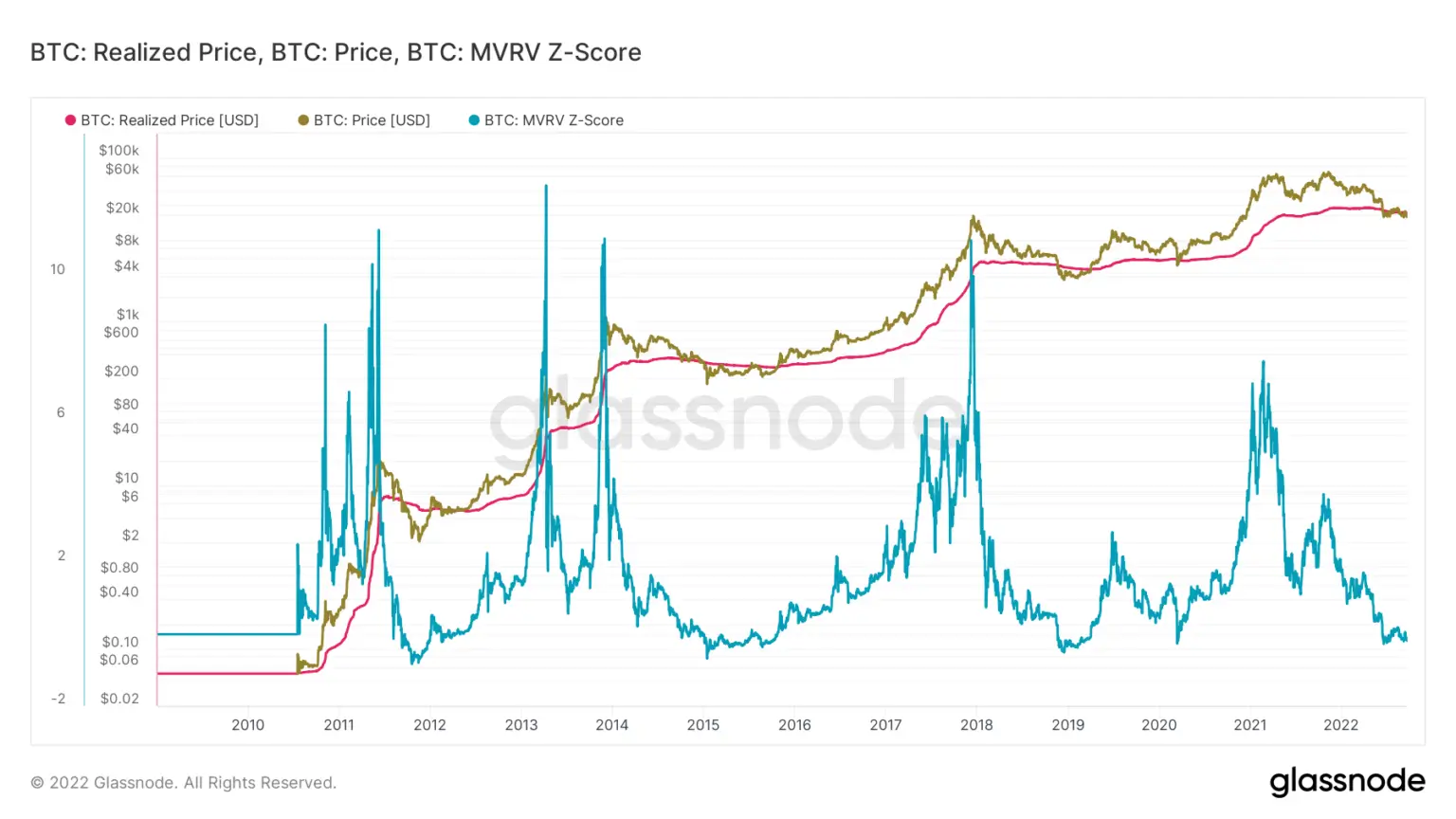
The MVRV Z-Score is currently in the green zone, suggesting a market bottom. However, this has been the case since the beginning of the bear market. In previous bear markets in 2020, 2019, 2014, and 2011, the MVRV Z-Score remained in today’s range between 20 and 300 days, suggesting that Bitcoin’s price can stay the same for six more months.
With that being said, Bitcoin can still drop lower in the future. The closest support level is $17,500, and falling below that would indicate that this bear market is none like the previous ones.
Crypto Market
Bitcoin (BTC)increased by 1.2% in the last 24 hours to be traded at $19,172. Ethereum also increased by 2.61%, reaching $1,331.