Key facts: Cardano 22K Txns; Mastercard Qualification Talks Resume tradingview.com
Source link ]]>
Ripple Receives Strong Credit Score, Shiba Inu (SHIB) Burn Rate Rockets 2,332%, Cardano (ADA) Exec Teases Mastercard Partnership TradingView
Source link ]]>
Cardano Gains On Mastercard Partnership, Google AI Quantum Ranking MarketForces Africa
Source link ]]>
Cardano Executive Teases Potential Mastercard Partnership: Details Cryptonews.net
Source link ]]>
Cardano Executive Teases Potential Mastercard Partnership: Details TradingView
Source link ]]>
Shiba Inu Price Prediction Weakens as Mastercard Builds on Solana While Pepeto SHIB and TAO Take Different Paths mexc.co
Source link ]]>
Ripple Partners With Mastercard, XRP Price Faces Bollinger Bands Squeeze, Dogecoin (DOGE) Prints 100% Surge in Volume — U.Today Crypto Digest TradingView
Source link ]]>
Interest in XRP is once again gaining momentum after reports that global payments giant Mastercard is exploring collaboration opportunities with Ripple and its blockchain-based payment infrastructure. The development has drawn attention across the digital asset space, as partnerships between traditional financial institutions and blockchain firms continue to shape the evolution of cross-border payments.
What The Collaboration Could Mean For The XRP Ecosystem
An initiative from Mastercard is drawing significant attention to the role of blockchain technology in global payments, particularly to XRP. Crypto commentator Archie revealed on X that Mastercard has recently launched a Crypto Partner Program that brings together more than 85 companies from across the digital asset ecosystem. The partnership includes platforms such as Binance, PayPal, and blockchain firm Ripple to revolutionize the role of digital assets in global payments.
This powerhouse collaboration aims to connect blockchain-based technologies directly to Mastercard’s global payments infrastructure, spanning over 200 countries. Archie suggests that this type of initiative could support use cases such as seamless cross-border transfers, lightning-fast business-to-business payments, and more instant global payout systems.
Within that framework, Ripple’s expertise in on-chain solutions payment infrastructure places it in a strategic position for XRP as the go-to asset for real-world utility. As traditional finance giants like Mastercard and Visa move to integrate crypto, XRP is primed for explosive growth. This isn’t hype, it’s adoption in action.
Where XRP Could Fit In The Expanding Digital Payments Ecosystem
The scale of stablecoin activity is becoming one of the most overlooked developments in the digital asset space. An analyst known as XFinanceBull has highlighted that in 2025 alone, stablecoins processed an estimated $33 trillion in transaction volume, reflecting real payment activity rather than projections. This growth has been rapid, with total transaction volume rising 72% year over year while global user adoption reportedly surged 146% across 106 countries.
Several regional dynamics are helping drive this expansion. In Nigeria, a remittance economy estimated at $59 billion is increasingly interacting with digital dollar alternatives. In Turkey, demand for dollar-denominated stability amid currency volatility has driven the adoption of stablecoins into everyday use. Meanwhile, institutional settlement initiatives in the United Arab Emirates are also contributing to the growing role of blockchain-based payment infrastructure.
One of the fastest-growing segments is cross-border business-to-business payments, which expanded 733% to about $226 billion in transaction flows. According to XFinanceBull, this trend reveals a deeper shift in finance, and stablecoins are evolving beyond trading tools into a foundational layer for digital payments.
Within this evolving landscape, Ripple’s stablecoin initiative, RLUSD, has positioned its ecosystem directly inside this expanding liquidity layer. As stablecoins move globally, the networks providing settlement infrastructure may become strategically important.
]]>Cardano Risk Management B.V. Sells 18,782 Shares of Mastercard Incorporated $MA MarketBeat
Source link ]]>

Mastercard is taking a major step toward simplifying how everyday users interact with digital assets by leveraging the Ethereum and Polygon network.
Related Reading: Hoskinson Vs. Cardano Foundation: From Berlin Parties To ‘Useful Idiots’
Through a new collaboration with Polygon Labs and payments infrastructure firm Mercuryo, the global payments giant is rolling out email-style wallet aliases designed to make crypto transfers feel as intuitive as sending a message online.
The upgrade expands Mastercard’s Crypto Credential program to self-custody wallets, replacing long, technical wallet addresses with human-readable IDs. For millions of users intimidated by complex hexadecimal strings, this shift could mark a turning point in mainstream crypto adoption.
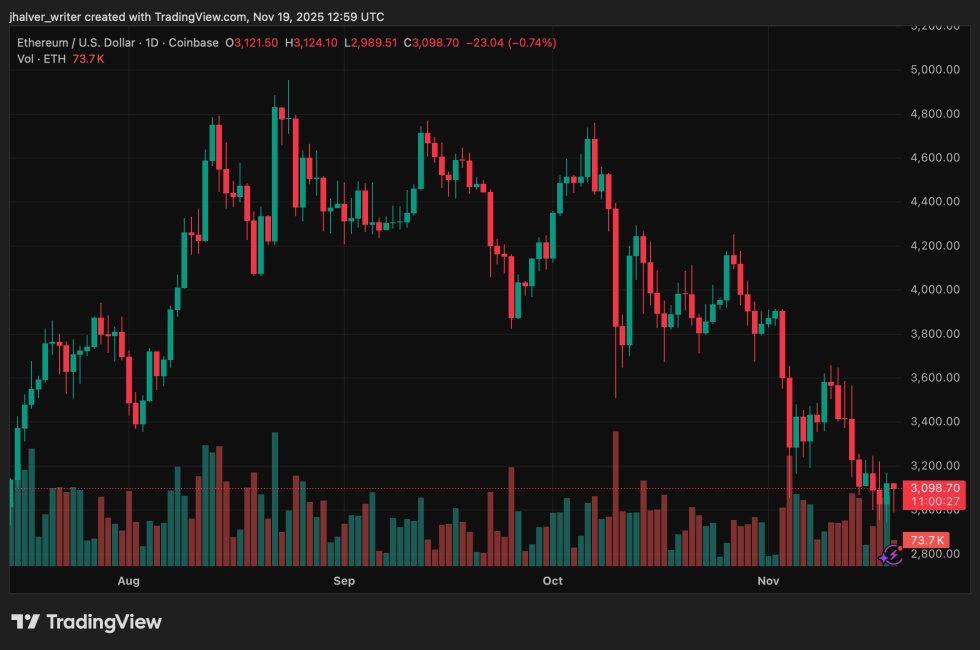
ETH's price trends to the downside on the daily chart. Source: ETHUSD on Tradingview
A New Identity Layer for Self-Custody Wallets
Under the new system, users can link wallets such as MetaMask to a verified alias issued through Mercuryo. After completing standard KYC checks, the user receives a simple username, similar to an email handle, that directs crypto to their self-custody wallet.
Polygon powers the underlying infrastructure, offering low-cost transactions and rapid settlement. Wallets can also mint a non-transferable “soulbound” credential on Polygon, publicly confirming that they belong to a verified user.
Mastercard states that this structure supports regulatory compliance, including Travel Rule requirements, without requiring users to relinquish control of their private keys.
Early access focuses on receiving funds through aliases, with outbound sending expected later. Mastercard notes that this framework is designed as a portable verification layer that can be moved across apps, wallets, and blockchains within the broader Crypto Credential network.
Why Mastercard Picked Polygon for the Rollout
Polygon’s selection as the first supported network reflects its growing reputation as a consumer-grade blockchain built for global-scale payments. Its upgrades, including the Rio and Heimdall v2 updates, have boosted throughput, improved finality, and reduced the risk of chain reorganizations.
With billions of dollars in stablecoin activity flowing through Polygon every month, analysts say the network offers the reliability and low operating costs that large institutions demand.
Polygon Labs CEO Marc Boiron called the initiative “the moment when self-custody becomes simple,” noting that alias-based transfers make blockchain interactions resemble familiar fintech experiences rather than technical workflows.
Shaping the Future of Identity-Driven Web3 Payments
For Mastercard, this rollout aligns with its broader strategy to bridge traditional finance and decentralized networks. The company has been expanding crypto services across 2024 and 2025, from debit card programs to on-chain settlement pilots.
By embedding identity, verification, and user-friendly interfaces into self-custody systems, Mastercard and Polygon are helping shape the next generation of digital payments.
Related Reading: What Happens To The Ethereum Price If It Replicates Bitcoin Supercycle?
If adopted widely, alias-based transfers could redefine how users engage with Web3, lowering barriers and accelerating mainstream participation in blockchain-based finance.
Cover image from ChatGPT, ETHUSD chart from Tradingview
Editorial Process for bitcoinist is centered on delivering thoroughly researched, accurate, and unbiased content. We uphold strict sourcing standards, and each page undergoes diligent review by our team of top technology experts and seasoned editors. This process ensures the integrity, relevance, and value of our content for our readers.