Stablecoin Salaries: The New Norm for Crypto Payroll in 2025 OneSafe
Source link ]]>
David Marcus, former President of PayPal and ex-Vice President of Messaging Products at Facebook, has recently projected that the Bitcoin Lightning Network will evolve to be the world’s most utilized payment network. Representing his team at Lightspark, Marcus highlighted the shifting paradigms toward cryptocurrency adoption in mainstream finance.
Marcus Advocates Bitcoin Lightning for Global Finance
At Lightspark, where Marcus is a key figure, there is a strong belief in the potential of Bitcoin (BTC) as a global settlement network. Marcus described Bitcoin as a neutral platform, ideal for transactions. This neutrality is pivotal for its acceptance and integration into daily financial operations. The addition of the Lightning Network—an overlay on the Bitcoin blockchain—aims to quicken transactions and lower costs. This layer could transform the payment landscape by making transactions quicker and more economical, thus appealing to both individuals and businesses.
JUST IN: Former PayPal President and Lightspark CEO David Marcus says every corporation in the world will end up using #Bitcoin Lightning to settle transactions
pic.twitter.com/MgxiowI8Za
— Bitcoin Magazine (@BitcoinMagazine) May 11, 2024
Marcus’s vision suggests a significant enhancement in payment methods, ensuring broader access and integration of cryptocurrency into the global economy. His insights come at a time when the intersection of digital payments and traditional financial processes is increasingly prominent, indicating a shift towards more integrated financial technologies.
Also Read: Bitcoin Price Could Plunge to $52K, Analyst Predicts
Marcus Touts Bitcoin as AI’s Future Currency
Coinbase, a leading U.S. cryptocurrency exchange, has already adopted the Bitcoin Lightning Network, underscoring the industry’s move towards faster and more efficient blockchain technologies. Before this integration, Bitcoin transactions on Coinbase were processed directly on the blockchain, taking anywhere from 10 minutes to two hours and incurring high fees during peak periods. The Lightning Network, by settling transactions off-chain through bidirectional payment channels, ensures nearly instant transactions at minimal fees.
Viktor Bunin, a protocol specialist at the exchange, has expressed optimism regarding the integration of the Lightning Network into Coinbase. He believes this development will not only expedite Bitcoin transactions but also enhance its utility and accessibility globally, marking a significant milestone in the cryptocurrency ecosystem.
Previously, Marcus has been vocally supportive of Bitcoin, suggesting it could become the preferred currency of Artificial Intelligence (AI) systems. This stance places BTC at the forefront of future technological advancements and highlights its potential role in the new digital economy. The combination of Bitcoin and AI technologies could lead to innovative applications and efficiencies in transaction processes, further solidifying Bitcoin’s position within the tech industry.
Also Read: FTX Claims Might Set Hedge Funds On Prosperous Path, But There’s a Twist

The presented content may include the personal opinion of the author and is subject to market condition. Do your market research before investing in cryptocurrencies. The author or the publication does not hold any responsibility for your personal financial loss.
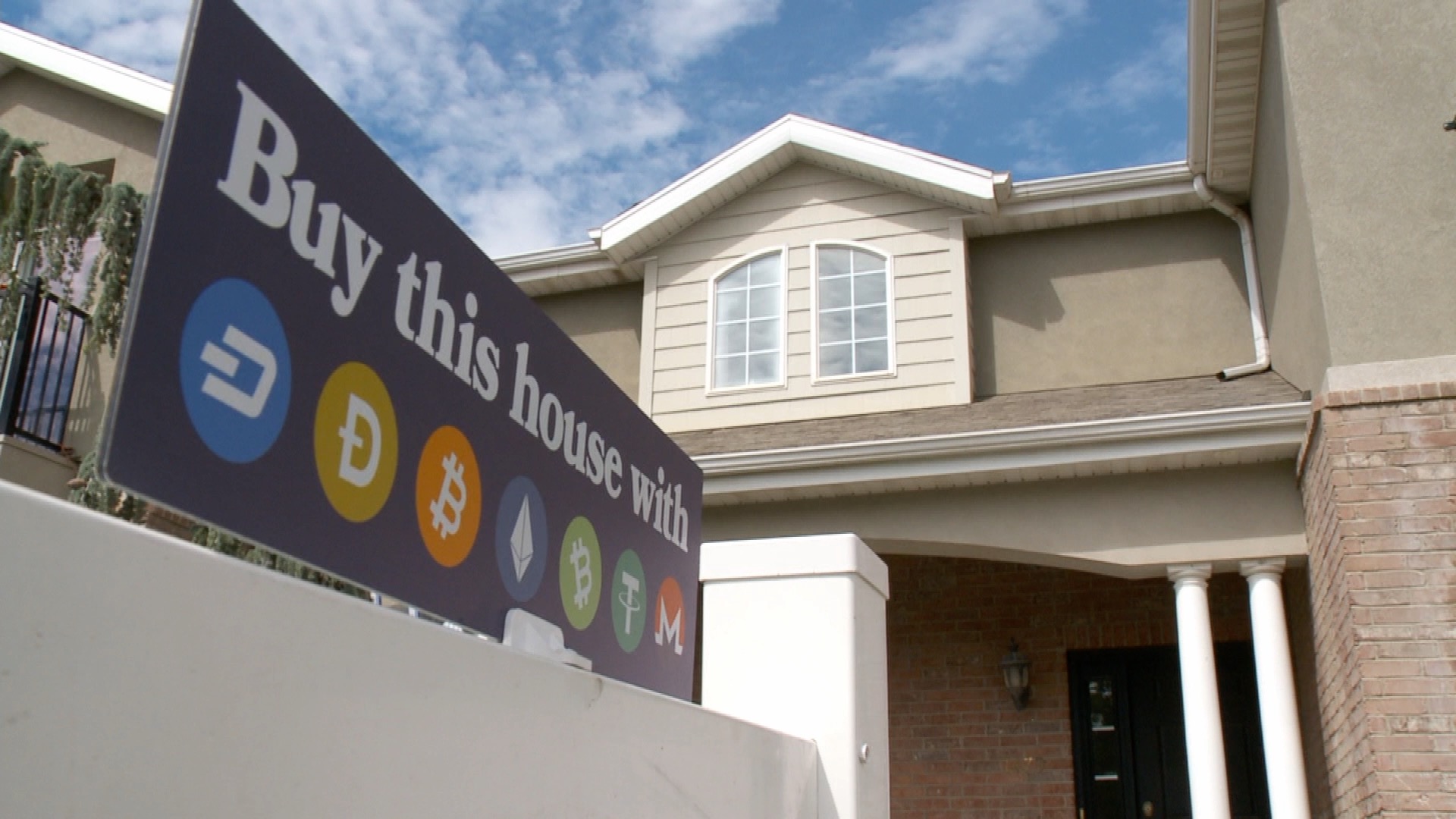
Salt Lake City tech entrepreneur Scott Paul put his longtime rental house up for sale in June on Homie.com, hoping to tap the red hot housing market. The price: $400,000—with a 10 percent discount if the buyer paid in Dogecoin.
It didn’t happen. Paul closed on the house in September with a full-price offer, but he got it in US dollars. Yet his cryptocurrency discount underscores cryptocurrency’s growing prevalence in real estate.
The crypto market has grown by almost $2 trillion this year alone and prices have surged across the board in recent months, even prompting the Biden Administration to consider an executive order on how to better regulate the industry for the sake of national security.
An estimated 47 percent of millennial millionaires have more than a quarter of their wealth in cryptocurrencies, according to a June survey by CNBC of 750 investors with at least $1 million in investable assets. More than a third of millennial millionaires have at least half their wealth in crypto.
A quick primer: cryptocurrency includes one of various online monetary systems, which includes more than 1,300 coins like Bitcoin, Ethereum, Cardano, BNB, XRP, Solana, and Dogecoin. These cryptocurrencies operate independently of governments or banks, and each payment is documented and verified through the blockchain, which is an online, shared database.
A decade after its birth, crypto is starting to move to offline purchases. More than 100,000 merchants—including Petco, Tesla, Famous Footwear, Bed Bath & Beyond, Nordstrom, Expedia, and Ulta Beauty—now accept crypto as payment for goods using the Gemini app or debit cards via crypto exchanges like Coinbase. Soon, vacation rental houses, parking spots, and dream homes will also be purchased on the blockchain.

In fact, more home sellers like Paul have begun advertising in home listings that they will accept crypto for full or partial payment.
Paul was the first to list a home for crypto on Homie, a Utah-based platform that gives sellers more transparency and control over the home selling process with the support of licensed agents and experts. But as regulation and standards emerge, closing home sales with cryptocurrency may be far more common in the future, says Homie founder and CEO Johnny Hanna.
Real estate companies across the world are already using blockchain smart contracts—in which agreement terms are written directly into lines of code—to make buying, renting, investing, and even lending easier. Sites like Open Listings let people search for homes they can purchase with bitcoin or ethereum, and Bithome lets you list and sell your home for crypto.
Florida-based RealT allows people to invest in fractional real estate using tokens, while PropertyClub in New York uses blockchain and smart contracts to conduct real estate transactions using crypto or its own coin, PropertyClub Coin (PCC). Another New York company, ManageGo, lets rental property owners manage and process payments and even do background checks. SMARTRealty uses smart real estate contracts to maintain property purchases and rental agreements. And Reasi has an end-to-end real estate platform with secure escrow.
There are even efforts to move the real estate industry’s multiple listing service (MLS) database to the blockchain to create a more transparent system where brokers and agents could see the histories of transactions for a property.
There are a few reasons why the blockchain is ideal for real estate transactions. A big one is Distributed Ledger Technology (DLT), which is a blockchain database that is collectively shared and synchronized across multiple sites, institutions, or geographies and accessible by multiple people. It allows transactions to have public “witnesses,” according to Investopedia. But really what it really does is increase trust and transparency—which is so important in real estate.
DLT also means transactions can be done quickly—minutes or days, rather than the traditional closing period of weeks or months. And it could lower costs and ensure secure transactions and potentially lower losses from wire fraud. But because cryptocurrencies are unregulated, it can be tricky for buyers when it comes to taxes. There is a capital gains tax any time you spend, trade, or exchange crypto.
For now, and as Paul discovered, it’s still extremely rare for home sales to be done entirely in cryptocurrencies. Both parties must agree to the use of crypto. Sellers who accept crypto can transfer it into dollars using a conversion service like BitPay, or they can hold the digital currency as their own asset—which can be risky because the value can drop immediately after the sale of your home.

Most of the action is in buyers converting digital wealth into US dollars and then investing it into real estate, which is considered a more stable asset class than crypto, says Sam Kamra, a realtor with BTCHome.ca, a cryptocurrency exchange site for Real Estate Bay Realty in Toronto. “Some people are sitting on $100 million worth of crypto,” Kamra says. “They need to diversify, and a lot of them have no idea what to do with it.”
So they’re buying homes, he says. BTCHome.ca works with an exchange to convert crypto dollars into traditional currency for easy real estate purchases. It would be highly unlikely that someone would actually pay in crypto for a home, he says. “I think the people who are listing that they want to receive crypto are doing it for a marketing stunt,” Kamra says.
Paul somewhat admits that he asked for Dogecoin to make headlines—and to make a statement. The tech executive stepped down as CEO of Salt Lake City word-of-mouth marketing firm Wooly to dive headfirst into cryptocurrency. Taking US dollars felt “off-brand,” says the 41-year-old. He had already made a mint in his crypto investments, and he started a YouTube channel centered around his life and crypto. He’s even adopted the nickname “Bitcoin Jesus.”
Paul enlisted the local peer-to-peer home sale site Homie to get the word out. He noted a preference for receiving payment in Dogecoin for the real estate transaction because he wanted to make history as the first Dogecoin home sale. He even hid Dogecoin symbols in each room for the virtual tour of the listing. “I like to do experiments,” Paul says. “And for a lot of people, it’s their first exposure to this.”
Dogecoin actually started as a joke when two software engineers created it to make fun of the wild speculation in cryptocurrencies at the time. Doge was a popular meme in 2013 of a Shiba Inu dog with an internal monologue written in broken English. But Dogecoin has turned into a legitimate investment—blessed by the Midas touch of Tesla CEO Elon Musk, who has tweeted about the currency throughout its existence. Despite its satirical nature, the currency rallied in August, after Musk and billionaire Mark Cuban said it was the strongest currency for exchange.
Paul has also been experimenting with decentralized finance, or DeFi, protocols—essentially crypto banks and lending platforms—and earned 25 to 1,000 percent returns on those investments. Those investments took having computer programmer friends who knew how to access those protocols.
That prompted Paul to find a way to make it easier for anyone to access DeFi opportunities. He’s building a yet-to-be-named app that will be a “Robinhood for DeFi,” democratizing access to decentralized lending platforms and banks and allowing users to reap interest rates multiple times higher than the interest rates of most banks. “We think this will be one of the biggest companies in Utah in three years,” Paul says.
As for the house? Paul received just one offer all in Dogecoin, but it was $100,000 short of his list price. He shrugged it off. It’s only a matter of time before crypto and the blockchain are standard in real estate transactions and everyday life, he says, whether it’s purchases, voting, or lending. “In 10 years, everyone will be touching the blockchain in their life,” he says. “This is 1993 internet days for crypto and blockchain technology.”
✓ Share: