Bartek Kiepuszewski, the co-founder of L2Beat, a portal for tracking Ethereum layer-2 activities, is concerned about the security and consistency of existing off-chain scaling solutions, suggesting that without fraud-proofs, there is room for fraud and irregularities.
Focus On Optimism And Manta: What’s Going On?
Taking to X on December 20, Kiepuszewski observed that some layer-2 solutions, such as Manta and Optimism, rely on sequencers to post data to Ethereum. However, without fraud-proofs, there is no way to verify that the data published by the Sequencer on the Ethereum mainnet is accurate or complete.
In the co-founder’s view, whenever a sequencer posts the batch of transactions on the main net, there is no layer-1 state or event change. Per Kiepuszewski ‘s assessment, this is a worrying challenge that should be addressed to ensure whatever is posted is valid.
As an illustration, the co-founder cited recent transactions posted by Optimism and MantaNetwork, two popular layer-2 scaling solutions for Ethereum. Kiepuszewski analyzed that Optimism recently sent a full “data blob” containing all layer-2 transactions.
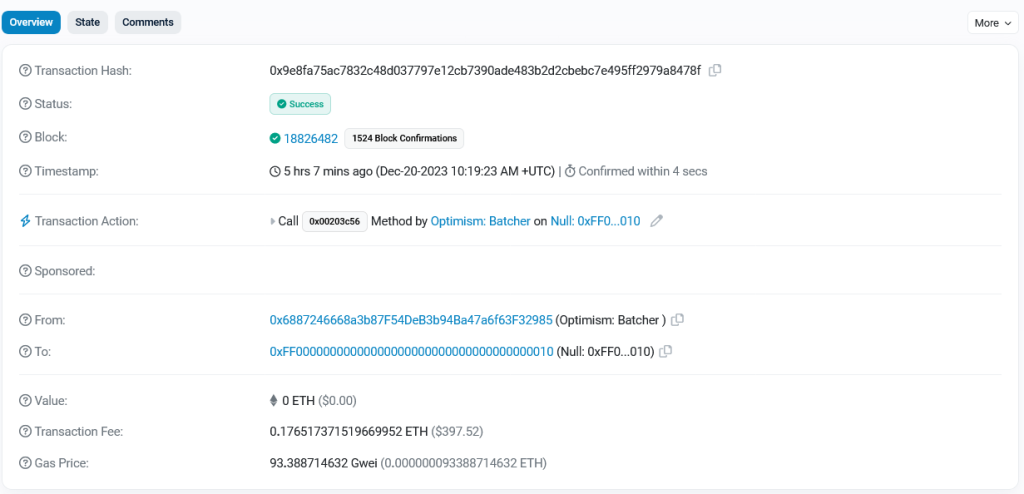
On the other hand, it was noted that MantaNetwork reportedly posted the “root hash of a data blob” to CelestiaOrg. The problem, the co-founder went on to add, is that despite these operations, Ethereum couldn’t determine whether their hashes were valid or not.
The co-founder argues that this could be a recipe for trouble since the lack of transparency on Sequencer’s operations presents a major concern, especially for users tracking the mainnet but not operating their layer-2 nodes.
Ethereum Layer-2s Command Billions Without Functional Fraud-Proof Systems
Technically, in the current state, Sequencers play a vital role in ensuring that transactions submitted by users of any layer-2 scaling platform like Optimism or Arbitrum are processed and confirmed to be valid before they are transmitted to the Ethereum mainnet.
However, while Ethereum layer-2 scaling solutions currently manage over $15 billion, based on L2Beat data, without public fraud-proofs, what sequencers publish on the mainnet becomes unclear.
According to L2Beat data, Manta Network has turned off its fraud-proof while still being developed on Optimism. At the same time, Arbitrum ‘s fraud-proof system is still not permissionless since validators must be whitelisted.
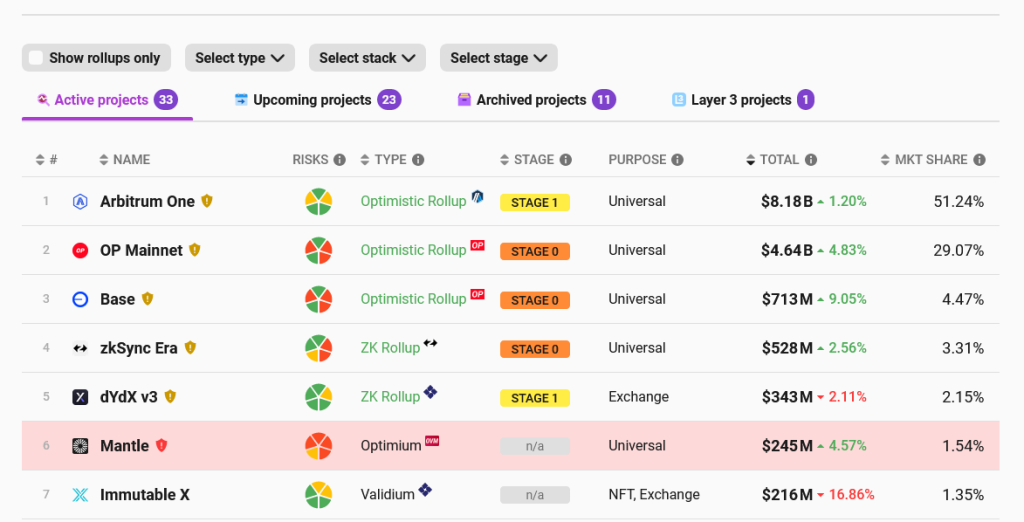
In all, in most leading layer-2 protocols managing millions in total value locked (TVL), there is no public system to monitor sequencers and whether they are submitting valid details to the mainnet.
Feature image from Canva, chart from TradingView
Cardano’s new “venture capitalists” paradise D1SoftballNews.com
Source link ]]>