
- The state of Utah has passed its Bitcoin bill but has dropped the Bitcoin reserve plan.
- The approved bill protects mining, staking, and self-custody rights.
- The bill now awaits Governor Cox’s signature, after which it will become effective starting May 2025.
On March 7, 2025, Utah lawmakers took a significant step toward integrating cryptocurrency into the state’s legal framework by passing HB230, the “Blockchain and Digital Innovation Amendments” bill.
However, the legislation, approved by the Senate in a 19-7-3 vote, no longer includes its original groundbreaking provision to establish a state Bitcoin reserve. Instead, it focuses on fostering a supportive environment for blockchain technology and protecting residents’ rights to engage with digital assets.
The bill now awaits the signature of Governor Spencer Cox, who has not yet indicated his stance. If signed into law, it will take effect on May 7, 2025, making Utah a progressive player in the US cryptocurrency landscape, even without the reserve clause that once promised to make it a pioneer.
The Bitcoin reserve contention
Initially introduced by Representative Jordan Teuscher and sponsored in the Senate by Senator Kirk A. Cullimore, HB230 aimed to position Utah as the first US state to hold Bitcoin in its treasury.
The original proposal allowed the state treasurer to invest up to 10% of certain public funds in Bitcoin (BTC), a move that could have involved millions from accounts like the General Fund and Budget Stabilization Fund. This clause survived earlier votes, raising hopes among crypto advocates.
However, during the third and final Senate reading, lawmakers stripped the reserve provision from the bill. Senator Cullimore acknowledged the change on the Senate floor, citing concerns over Utah being an early adopter of such a bold financial policy.
The House later concurred with the amendment in a 52-19-4 vote, reflecting a cautious retreat from the state-managed Bitcoin investment idea.
Approved bill protects Utah crypto holders
Despite removing the reserve clause, HB230 retains significant provisions that bolster Utah’s blockchain ecosystem.
The approved legislation ensures residents can self-custody their digital assets without state interference, a key win for individual freedom in the crypto space. It also safeguards the right to mine Bitcoin, operate blockchain nodes, and participate in staking—activities central to the decentralized nature of cryptocurrencies.
These measures aim to empower Utahns and attract blockchain innovators to the state. By clarifying legal terms related to digital assets and prohibiting restrictive regulations, the bill lays a foundation for growth in this emerging sector.
Supporters argue that the bill balances innovation with safety, positioning Utah as a potential hub for crypto-related businesses.
25 out of 31 Bitcoin reserve bills remain active in the US
Utah’s legislative journey mirrors a nationwide push toward Bitcoin integration. While the state stepped back from its reserve ambitions, Arizona and Texas are advancing similar bills, having passed Senate committee votes.
According to Bitcoin Laws data, 25 of 31 introduced Bitcoin reserve bills across the US remain active, with states like Illinois and New Hampshire also in the race.
On the federal level, President Donald Trump signed an executive order on March 7, 2025, creating a Strategic Bitcoin Reserve using seized assets. This move, paired with plans for budget-neutral acquisitions, underscores a growing acceptance of Bitcoin (BTC) at both the state and national levels.
Utah’s amended bill, while less ambitious, aligns with this trend by prioritizing citizen participation over direct state investment.
Strategic Bitcoin Reserve has become more prominent in the US now that Utah’s Committee has cleared the bill. This has made Utah the second US state to do so, inching closer to adding Bitcoin for strategic reserves. It is speculated that if the bill is approved, it will pave the way for other states to do the same.
Meanwhile, BTC is undergoing a correction phase as the token has plunged over the past 24 hours.
Utah Approves Strategic Bitcoin Reserve Bill
Dennis Porter, co-founder of Satoshi Act Fund, published a post on X shared the progress in strategic Bitcoin reserve in the United States. Notably, Utah has approved the bill adding BTC, making it the second US state to do so after Arizona advanced its Strategic Bitcoin Reserve Act (SB1025).
Utah’s Strategic Bitcoin Reserve bill will now be presented to the state legislature and governor for signature. Further approval will make it a legal law in the US state.
It is estimated that as many as 11 US states are pushing to add BTC in strategic reserves with the most common allocation of 10% of their funds. An approval in Utah is expected to pave the way for many more states. Interestingly, Bitcoin reserve bill in South Dakota has picked pace following in the footsteps of Arizona. Logan Manhart, State Representative for South Dakota, has called this one of the few chances the government has at being proactive.
What’s Next?
The bill will now officially move out of the committee and presented to the governor. It will become a law after the governor signs the bill that is currently supported by a super-majority vote in the state. If approved, Utah will soon have its Strategic Bitcoin Reserve and serve as a reference point for other US states. The bill is being processed under the leadership of Jordan Teuscher who has earlier announced HB230, allowing Utah to invest in digital assets.
It is also speculated that the US may adopt the XRP in Strategic Reserve. The crypto community is split into two with one side suggesting that including any other digital asset into strategic reserve could have ‘serious negative consequences’.
Bitcoin Price Correction
The strategic Bitcoin reserve development in Utah has triggered a slight correction phase for Bitcoin. BTC price is down by 0.89% in the last 24 hours, and is exchanging hands at $102,248.93. It further reflects a drop of 3.39% in the last 7 days and a surge of 9.55% in the last 30 days.
A lot of experts have supported this situation by saying that drops in BTC prices are opportunities to accumulate the flagship token. MicroStrategy, for one, has already added 10,107 BTC to its holdings and Metaplanet has announced plans to raise funds to buy more Bitcoin tokens.

Coingape Staff
CoinGape comprises an experienced team of native content writers and editors working round the clock to cover news globally and present news as a fact rather than an opinion. CoinGape writers and reporters contributed to this article.
Disclaimer: The presented content may include the personal opinion of the author and is subject to market condition. Do your market research before investing in cryptocurrencies. The author or the publication does not hold any responsibility for your personal financial loss.
Salt Lake City tech entrepreneur Scott Paul put his longtime rental house up for sale in June on Homie.com, hoping to tap the red hot housing market. The price: $400,000—with a 10 percent discount if the buyer paid in Dogecoin.
It didn’t happen. Paul closed on the house in September with a full-price offer, but he got it in US dollars. Yet his cryptocurrency discount underscores cryptocurrency’s growing prevalence in real estate.
The crypto market has grown by almost $2 trillion this year alone and prices have surged across the board in recent months, even prompting the Biden Administration to consider an executive order on how to better regulate the industry for the sake of national security.
An estimated 47 percent of millennial millionaires have more than a quarter of their wealth in cryptocurrencies, according to a June survey by CNBC of 750 investors with at least $1 million in investable assets. More than a third of millennial millionaires have at least half their wealth in crypto.
A quick primer: cryptocurrency includes one of various online monetary systems, which includes more than 1,300 coins like Bitcoin, Ethereum, Cardano, BNB, XRP, Solana, and Dogecoin. These cryptocurrencies operate independently of governments or banks, and each payment is documented and verified through the blockchain, which is an online, shared database.
A decade after its birth, crypto is starting to move to offline purchases. More than 100,000 merchants—including Petco, Tesla, Famous Footwear, Bed Bath & Beyond, Nordstrom, Expedia, and Ulta Beauty—now accept crypto as payment for goods using the Gemini app or debit cards via crypto exchanges like Coinbase. Soon, vacation rental houses, parking spots, and dream homes will also be purchased on the blockchain.
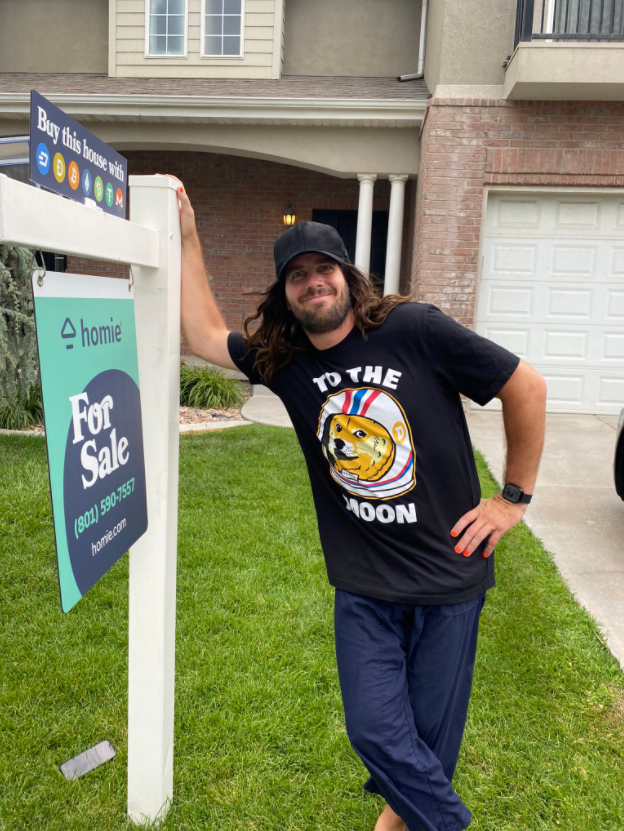
In fact, more home sellers like Paul have begun advertising in home listings that they will accept crypto for full or partial payment.
Paul was the first to list a home for crypto on Homie, a Utah-based platform that gives sellers more transparency and control over the home selling process with the support of licensed agents and experts. But as regulation and standards emerge, closing home sales with cryptocurrency may be far more common in the future, says Homie founder and CEO Johnny Hanna.
Real estate companies across the world are already using blockchain smart contracts—in which agreement terms are written directly into lines of code—to make buying, renting, investing, and even lending easier. Sites like Open Listings let people search for homes they can purchase with bitcoin or ethereum, and Bithome lets you list and sell your home for crypto.
Florida-based RealT allows people to invest in fractional real estate using tokens, while PropertyClub in New York uses blockchain and smart contracts to conduct real estate transactions using crypto or its own coin, PropertyClub Coin (PCC). Another New York company, ManageGo, lets rental property owners manage and process payments and even do background checks. SMARTRealty uses smart real estate contracts to maintain property purchases and rental agreements. And Reasi has an end-to-end real estate platform with secure escrow.
There are even efforts to move the real estate industry’s multiple listing service (MLS) database to the blockchain to create a more transparent system where brokers and agents could see the histories of transactions for a property.
There are a few reasons why the blockchain is ideal for real estate transactions. A big one is Distributed Ledger Technology (DLT), which is a blockchain database that is collectively shared and synchronized across multiple sites, institutions, or geographies and accessible by multiple people. It allows transactions to have public “witnesses,” according to Investopedia. But really what it really does is increase trust and transparency—which is so important in real estate.
DLT also means transactions can be done quickly—minutes or days, rather than the traditional closing period of weeks or months. And it could lower costs and ensure secure transactions and potentially lower losses from wire fraud. But because cryptocurrencies are unregulated, it can be tricky for buyers when it comes to taxes. There is a capital gains tax any time you spend, trade, or exchange crypto.
For now, and as Paul discovered, it’s still extremely rare for home sales to be done entirely in cryptocurrencies. Both parties must agree to the use of crypto. Sellers who accept crypto can transfer it into dollars using a conversion service like BitPay, or they can hold the digital currency as their own asset—which can be risky because the value can drop immediately after the sale of your home.
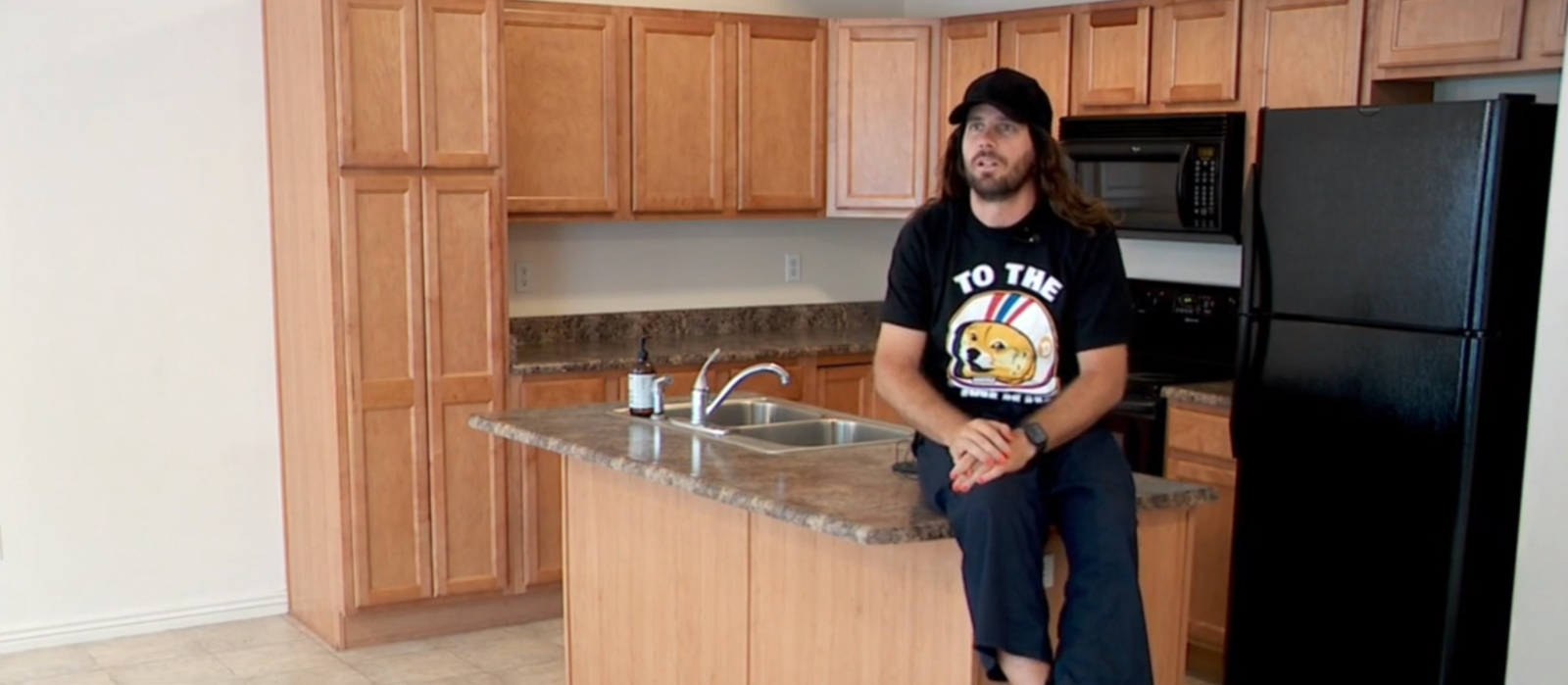
Most of the action is in buyers converting digital wealth into US dollars and then investing it into real estate, which is considered a more stable asset class than crypto, says Sam Kamra, a realtor with BTCHome.ca, a cryptocurrency exchange site for Real Estate Bay Realty in Toronto. “Some people are sitting on $100 million worth of crypto,” Kamra says. “They need to diversify, and a lot of them have no idea what to do with it.”
So they’re buying homes, he says. BTCHome.ca works with an exchange to convert crypto dollars into traditional currency for easy real estate purchases. It would be highly unlikely that someone would actually pay in crypto for a home, he says. “I think the people who are listing that they want to receive crypto are doing it for a marketing stunt,” Kamra says.
Paul somewhat admits that he asked for Dogecoin to make headlines—and to make a statement. The tech executive stepped down as CEO of Salt Lake City word-of-mouth marketing firm Wooly to dive headfirst into cryptocurrency. Taking US dollars felt “off-brand,” says the 41-year-old. He had already made a mint in his crypto investments, and he started a YouTube channel centered around his life and crypto. He’s even adopted the nickname “Bitcoin Jesus.”
Paul enlisted the local peer-to-peer home sale site Homie to get the word out. He noted a preference for receiving payment in Dogecoin for the real estate transaction because he wanted to make history as the first Dogecoin home sale. He even hid Dogecoin symbols in each room for the virtual tour of the listing. “I like to do experiments,” Paul says. “And for a lot of people, it’s their first exposure to this.”
Dogecoin actually started as a joke when two software engineers created it to make fun of the wild speculation in cryptocurrencies at the time. Doge was a popular meme in 2013 of a Shiba Inu dog with an internal monologue written in broken English. But Dogecoin has turned into a legitimate investment—blessed by the Midas touch of Tesla CEO Elon Musk, who has tweeted about the currency throughout its existence. Despite its satirical nature, the currency rallied in August, after Musk and billionaire Mark Cuban said it was the strongest currency for exchange.
Paul has also been experimenting with decentralized finance, or DeFi, protocols—essentially crypto banks and lending platforms—and earned 25 to 1,000 percent returns on those investments. Those investments took having computer programmer friends who knew how to access those protocols.
That prompted Paul to find a way to make it easier for anyone to access DeFi opportunities. He’s building a yet-to-be-named app that will be a “Robinhood for DeFi,” democratizing access to decentralized lending platforms and banks and allowing users to reap interest rates multiple times higher than the interest rates of most banks. “We think this will be one of the biggest companies in Utah in three years,” Paul says.
As for the house? Paul received just one offer all in Dogecoin, but it was $100,000 short of his list price. He shrugged it off. It’s only a matter of time before crypto and the blockchain are standard in real estate transactions and everyday life, he says, whether it’s purchases, voting, or lending. “In 10 years, everyone will be touching the blockchain in their life,” he says. “This is 1993 internet days for crypto and blockchain technology.”
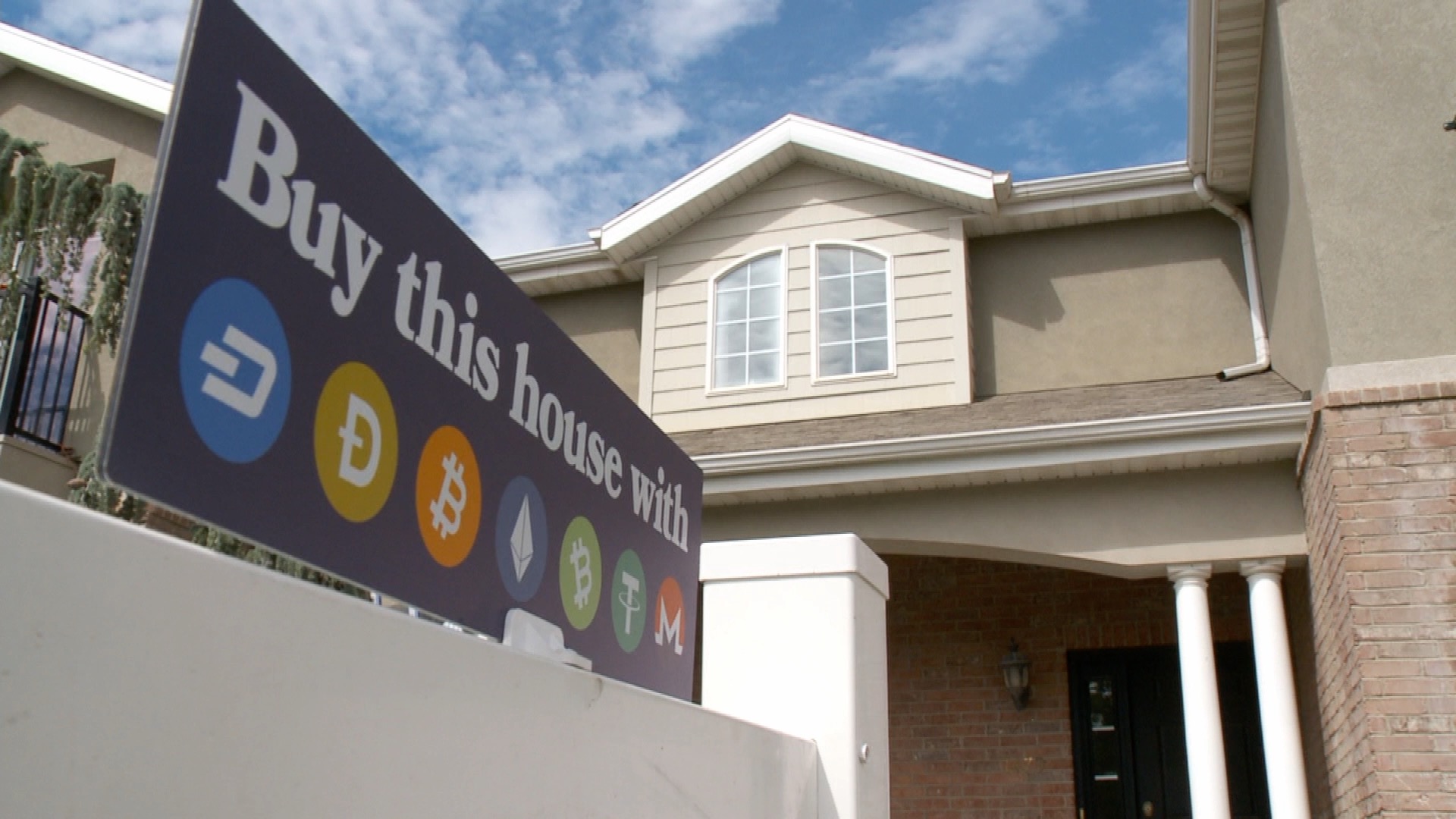
Crypto as a payment option for real estate continues to gain traction as the adoption of digital currencies for commercial transactions continues to take shape.
Scott Paul, founder of Utah-based marketing agency Wooly, put up his Saratoga Springs home for sale, with Dogecoin (DOGE) as an acceptable payment method, according to a report by Fox 13 on Sunday.
While the listing price is set at $399,000, Paul is reportedly ready to offer a 10% discount if the purchase is made via Dogecoin. Commenting on the potential volatility risk associated with a real estate deal conducted via DOGE, Paul remarked, “I’m a very risky person. I think the chances of me selling it in Dogecoin and having it go up by 20%, 30% or 40% is more likely.”
Given the current price of Dogecoin, Paul’s house listing at a 10% discount will amount to 1,734,782.60 DOGE. The eighth-ranked crypto is down 72% from its May all-time high as of the time of writing.
The Wooly founder’s background in brand recognition and viral marketing also offers a likely explanation for the decision to accept Dogecoin as a payment option. DOGE is arguably the largest viral meme coin in the crypto space, with its price growth often fueled by the same techniques ubiquitous in the influencer marketing arena.
Related: Law professor calls for crypto mining regulation during US Senate hearing
For Paul, the decision to accept Dogecoin for his house is also part of a longstanding interest in cryptocurrencies dating back to 2015. Paul told Fox 13 that he was an early adopter of Bitcoin (BTC) and Ether (ETH).
As previously reported by Cointelegraph, Bitcoin payments for real estate are on the rise. In June, E11even Hotel and Residences, a Miami-based luxury condo developer, announced the receipt of its first crypto deposit for property purchases.
A man in Utah is willing to sell his home for a 10% discount if a buyer pays in meme cryptocurrency Dogecoin (CRYPTO: DOGE).
What Happened: Homeowner Scott Paul said he is willing to offer a discount on the $399,000 sale price because he believes in the future of cryptocurrency, particularly Dogecoin, Fox13 News reported.
Paul, the founder of Utah-based tech company Wooly, believes that even if he sells the house for Dogecoin at a discount, the price of the cryptocurrency rising “by 20, 30 or 40%” is more likely, as per the report. He added he is not worried about the volatile price of dogecoin as he is comfortable with the cryptomarket’s wild swings.
See also: How To Buy Dogecoin (DOGE)
A person buying the house would be required to have about 1.94 million dogecoins for the equivalent of $399,000, based on dogecoin’s value of $0.20 at press time.
Paul reportedly said he has received two offers from people who are ready to buy the house in cryptocurrency.
See Also: Dogecoin Creator Says This Is The ‘Ultimate C*ap Coin — ‘ And For A Good Reason
Why It Matters: Created mainly as a joke in 2013, Dogecoin’s acceptance as a payment option by companies has gained momentum this year.
It was reported last week that Burger King Brazil is now accepting the meme cryptocurrency as a payment method for the purchase of Dogpper, a dog snack it recently introduced.
However, the prices of cryptocurrencies are seeing high volatility in recent months. While Dogecoin’s year-to-date gains are an impressive 3,509.2%, the Shiba Inu-themed cryptocurrency is down almost 72.2% from its all-time high of $0.7376 reached in May.
Price Action: Dogecoin is down almost 4.2% during the last 24 hours, trading at $0.2053 at press time.
Read Next: Dogecoin Community Right Now Showing ‘Lot Of Early Signs Of Illness,’ Says Co-Founder
SARATOGA SPRINGS, Utah — Cryptocurrency is rising in popularity and you’ve likely heard of some of them.
Bitcoin, Etherium, Litecoin, and Dogecoin are just a few of the well-known ones.
Now people like Scott Paul are trying to invest in them more because they believe it’s the future of currency.
He’s the Founder of Wooly and said he has a big interest in cryptocurrency.
“I got lucky and got into Etherium and Bitcoin in 2015 and then I was just one of those individuals who believed in the stories I was hearing that one day it would become a lot more,” said Paul.
The Saratoga Springs homeowner is trying to get someone to buy his house for $399,000, but he said he will give someone a negotiable discount of about 10% if they buy it with Dogecoin.
There are a couple of potential issues with this though.
For one, Dogecoin is very volatile, meaning the value can go up or down very easily, but this factor doesn’t seem to worry Paul.
The tech entrepreneur said, “I’m a very risky person. I think the chances of me selling it in Dogecoin and having it go up by 20, 30, or 40% is more likely.”
The second issue is you can’t really buy a home in the traditional sense using cryptocurrency.
Julian Fowkes, the Senior Manager of Listing Operations at Homie said, “You would have to convert your current cryptocurrency into U.S. dollars for a traditional escrow company to be able to hold it and help facilitate the transaction.”
The licensed Realtor also said that the seller would need to convert the money back into cryptocurrency after the sale was complete if that’s what the seller is after.
The alternative option would be having lawyers draw up a contract that both the buyer and the seller sign to exchange the money and title of the home on a peer-to-peer basis.
“The contract is written in U.S. dollars, so if you’re buying a house for $300,000, at the end of the transaction that’s how much cash needs to be given to the seller,” said Fowkes.
So regardless of whether the value of the cryptocurrency goes up or down in the time it takes for the home sale to finalize, you still owe the same dollar amount.
“I think the future is peer-to-peer. It’s just going to be sending that money, smart contract technology will hold it, and once the purchase contract is complete, it will release the money to the seller,” said Fowkes.
Based on the market value from August 1, 2021, a buyer would need to have about Ɖ1,900,000 to get the equivalent of $399,000.
Paul said he has already gotten two offers from people to buy the home in cryptocurrency.
✓ Share: