Crypto News: Pepeto Crosses $7.44M as Questions Weather Elon Musk Can Push Dogecoin Price Prediction To $10 Rise StreetInsider
Source link ]]>
Cardano (ADA) Price: Can the Token Weather the Storm of Founder Controversy? CoinCentral
Source link ]]>
Can XRP & Shiba Inu Weather Storms While Minotaurus Chart a New Course? DK1250
Source link ]]>
Best New Meme Coins to Invest in for Short Term: Arctic Pablo Coin Hits First Major Milestone as Mog Coin and Shiba Inu Weather the Bearish Storm Analytics Insight
Source link ]]>
Cardano’s Chang Hard Fork Waits for Better Weather: IOG Postpones Launch to September 1 CryptoGlobe
Source link ]]>
Cardano Founder Says Real Cryptos Will Weather Any Storm As $300 Billion Is Wiped Out Of Crypto Market ZyCrypto
Source link ]]>
Rebel Satoshi’s $RECQ Presale Shines as the Beacon of Opportunity While Dogecoin and Filecoin Weather the Market Punch Newspapers
Source link ]]>

Key Takeaways
- Long-term holders now hold 75% of the total circulating supply of Bitcoin
- The cohort has been growing steadily over the last eighteen months
- Enthusiasts hope the growth in the number of coins hoarded by long-term holders will cause a supply shortage and squeeze the price upward in the long-term
The last eighteen months have been challenging for Bitcoin investors. While the asset has bounced back strongly thus far in 2023, it remains over 60% off its all-time high set in November 2021.
The scale of the damage in 2022 can be seen when glancing at a price chart, portraying the extent of the fall.
The asset careened downwards as the Federal Reserve transitioned to a tight monetary policy approach in response to spiralling inflation. From years of low interest rates, hikes came thick and fast as policymakers scrambled to get a lid on an overheating economy.
With Bitcoin residing so far out on the risk curve, capital fled the asset amid the great tightening of global liquidity. However, while price charts don’t make pretty reading, there has been one notable bright spot when looking at on-chain data.
That is the proportion of long-term holders, which has shown impressive growth throughout the turbulence. As the next chart from Glassnode shows, the cohort has grown since the start of 2022 aside from three periods (with one of those extremely short).
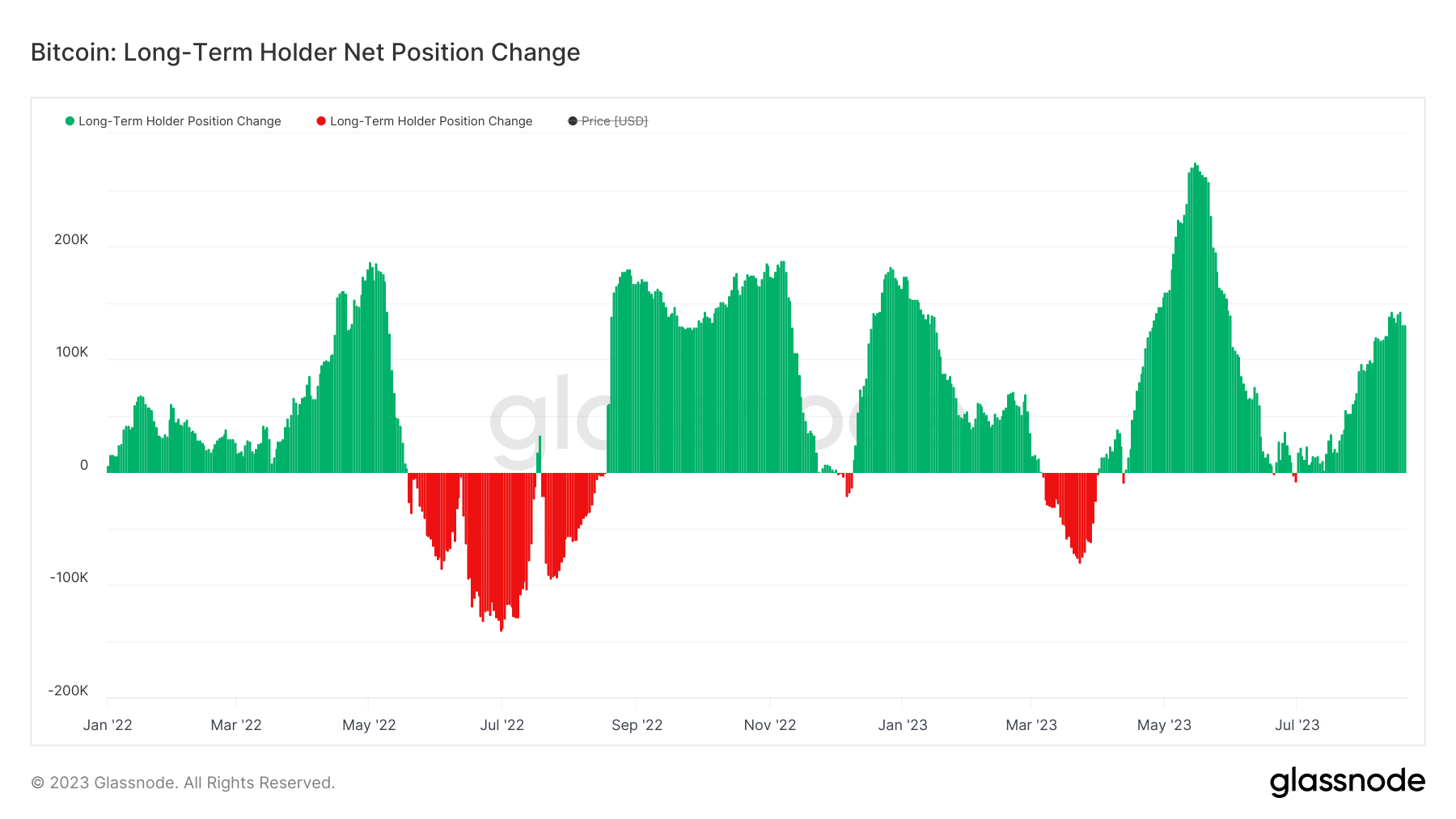 (As a note, Glassnode defines long and short-term holders via a logistic function centered at an age of 155 days and a transition width of 10 days).
The first period was between May and August 2022, when the crypto world was thrown into disarray. Already fighting a glum macro picture with newly-rising rates and rampant inflation, digital assets got hammered further with the startling death spiral of the UST stablecoin, leading to the collapse of all things Terra. This in turn sparked contagion across the sector, the summer filled with bankruptcies.
The second period which saw long-term holders waver was very brief, following the FTX collapse last November. The third was then March of this year, which saw apparent profit-taking as Bitcoin increased off the back of more dovish forecasts around the future path of interest rate rises following the regional bank crisis.
This has led to a position today whereby 14.6 million Bitcoin are held by long-term holders, equivalent to 75% of the total circulating supply.
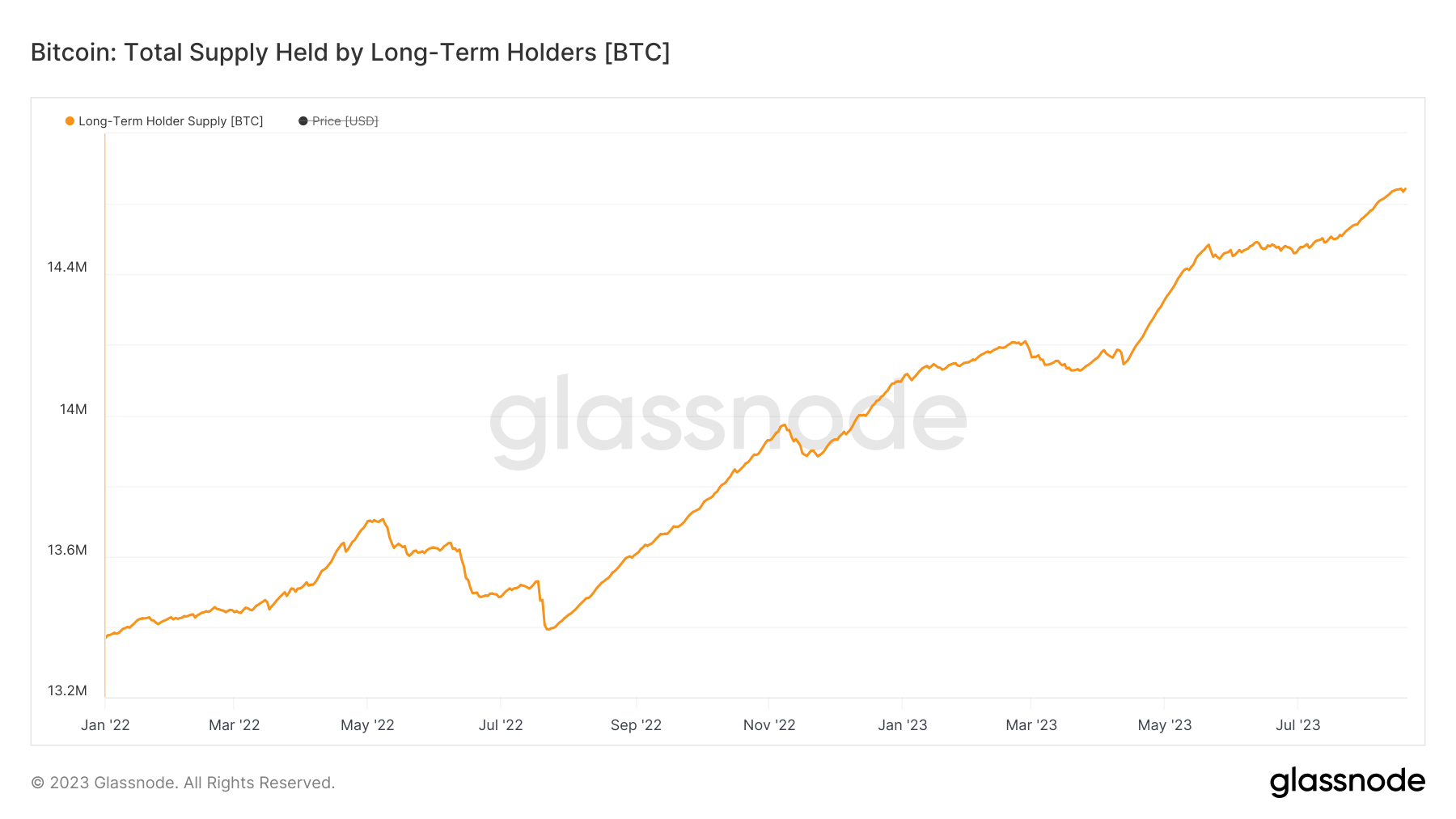
The portion of the supply claimed by long-term holders is interesting to track as it is an oft-referenced point by Bitcoin enthusiasts when forecasting the long-term price of the asset. With the overall supply capped at 21 million coins and the rate of increase in supply halving every fours years, they argue that a supply-side squeeze will push the price of Bitcoin up. As long-term holders hoard greater amounts of the supply, there will only be less Bitcoin to go around.
Obviously, the demand side of the equation needs to hold up its end of the bargain for this to be true. But amid an extremely challenging eighteen months for Bitcoin, the apparent resilience of long-term holders is certainly a silver lining, and may become more and more relevant as time goes on.
Cardano surrenders to the bears; will ADA holders weather the storm? AMBCrypto News
Source link ]]>
While the crypto market had succumbed to the winter, there are some digital assets that have refused to be dragged down with it. These cryptocurrencies putting up a harder fight than even their larger counterparts have been able to keep their heads above water. Two weeks into the new month and most assets in the space are already in the red. However, the Mid Cap cryptocurrencies have barreled in the opposite direction.
Mid Cap Index Takes The Lead
The July market has not been a favorable one for investors. This is evident in the red figures plastered all across the charts. Bitcoin which has seen the most support recently has not been able to escape the onslaught either but there is a group of coins that have been able to turn it around for good.
Related Reading | Bitcoin Daily Exchange Net Flows Shows Sell-Offs Have Not Subsided
The Mid Cap Index is one comprised of coins that are ranked 11 to 50 on the market. These coins are those that have proven themselves over time and as a result, have built an impressive community behind them. Given this, they have been able to shoulder the bear market better than any other cryptocurrencies. While other indexes had been seeing negative returns, the Mid Cap Index is up 1.9% in the first two weeks of July.

Mid Cap Index is in the green | Source: Arcane Research
For comparison, bitcoin is down -0.2% since July started. The small cap index has done better than bitcoin in this regard but still remains in the red with -0.1% so far. As for the Large Cap Index, they have taken the largest hit in the market. These top 10 tokens have seen a combined -0.9%, the largest losses in the market.
Crypto Market Leaders
Despite the Mid Cap Index maintaining the most recovery during the bear market, the crypto market leaders have still retained their hold on the market. Bitcoin’s dominance over the market remains high and stablecoins have not been letting go of any of their market share either.
BTC dominance on the rise | Source: Market Cap BTC Dominance on TradingView.com
The decline in bitcoin’s price did not in any way impact its dominance. In fact, bitcoin had added another 0.43% to its market dominance, mostly stealing this dominance off other large caps such as Ethereum and BNB. Its market dominance is now sitting at 43.78% at the time of this writing.
Related Reading | Cardano (ADA) Price Remains Low Despite Buzz Around Vasil Hard Fork
In the same vein, stablecoins are maintaining a strong hold on their market dominance. They have acted as a safe haven for investors who are trying to escape the extreme volatility of the crypto market while not completely moving their funds out. USDT, USDC, and BUSD all added to their market dominance in the last week with 0.16%, 0.19%, and 0.06% gains in dominance in the same time period.
As the week draws to a close, it is hard to pinpoint which index will win out for this week. One thing that is certain though is that there are bound to be more losses than gains as the weekend nears.
Featured image from Inc. Magazine, charts from Arcane Research and TradingView.com
Follow Best Owie on Twitter for market insights, updates, and the occasional funny tweet…