Australian computer scientist and self-described Bitcoin founder Craig Wright has taken to the courts once again, this time filing a $1.18 billion lawsuit against Block, a payment company owned by Jack Dorsey.
Wright – who spuriously claims to be Satoshi Nakamoto – is accused of contempt of court by the Crypto Open Patent Alliance – COPA. It is the same group that, earlier this year, provided “overwhelming” evidence Wright did not invent Bitcoin.
“Faketoshi” Craig Wright Held in Contempt Again
An Australian computer scientist Craig Wright, who has said he invented Bitcoin, is accused of contempt of court on Friday. He filed a $1.18B lawsuit against Block, the company founded by Twitter co-founder Jack Dorsey, in a British court.
Wright insists that he authored the original, 16 years old Bitcoin whitepaper, a work published under the pseudonym “Satoshi Nakamoto.” However, the court ruled that there was “overwhelming evidence” showing that Wright didn’t write the foundational 2008 document.
The Crypto Open Patent Alliance sued Craig Wright to prevent him from suing Bitcoin developers. Following a weeklong trial at London’s High Court, a judge ruled in May that Wright had lied “extensively and repeatedly.” The court also ruled Wright forged documents “on a grand scale.”
In July, the judge referred Wright to Britain’s Crown Prosecution Service to decide whether he should be put under perjury charges. The court also issued an injunction against Wright from initiating any legal action based on his claim to be Satoshi.
Denying the Document Forgery
Craig Wright is appealing a decision of the High Court. It found him to have lied and forged documents purporting his claim to be the creator of Bitcoin. A decision as to whether he will be allowed an appeal has yet to be decided.
In his testimony in February, Mr Wright denied the forgery of the documents. However, during a preliminary hearing on Friday, the COPA lawyer, Jonathan Hough, said that Wright breached the court’s injunction by filing a lawsuit against Square Up Europe Limited, a Block subsidiary, earlier this month. Wright attended the hearing via videolink from Singapore and didn’t have legal representative.
Craig Wright has said that he doesn’t believe he is in contempt of court over the Block case. He indicated that he would amend his lawsuit, if found in contempt, to make clear it has “nothing to do with the ownership of the creation of the system.” Whether Wright was in contempt will be clear at a hearing set for December. In the meantime, his suit against Block will stay active until then.

Teuta
Teuta is a seasoned writer and editor with over 15 years of experience in macroeconomics, technology, and the cryptocurrency and blockchain industries. Starting her career in 2005 as a lifestyle writer for Cosmopolitan in Croatia, she expanded into covering business and economy for several esteemed publications like Forbes and Bloomberg. Influenced by figures like Don Tapscott and Bruce Dickinson, Teuta embraced the blockchain revolution, believing crypto to be one of humanity’s most crucial inventions. Her fintech involvement began in 2014, focusing on crypto, blockchain, NFTs, and Web3. Known for her excellent teamwork and communication skills, Teuta holds a double MA in Political Science and Law, enjoys punk rock, chablis, and has a passion for shoes.
Disclaimer: The presented content may include the personal opinion of the author and is subject to market condition. Do your market research before investing in cryptocurrencies. The author or the publication does not hold any responsibility for your personal financial loss.
Cardano Founder Charles Hoskinson Calls Out Craig Wright Amid Recent Lawsuit CoinGape
Source link ]]>
In a stunning turn of events Bitcoin SV Founder Craig Wright known for his persistent claims of being Bitcoin’s elusive creator, Satoshi Nakamoto, now faces the prospect of perjury charges in the United Kingdom. A London High Court judge has taken the extraordinary step of referring Wright’s case to British prosecutors
Craig Wright Perjury Investigation In UK
Craig Wright who has long claimed to be the inventor of Bitcoin, faces potential perjury charges in the United Kingdom. On Tuesday, a judge at London’s High Court referred Wright’s case to British prosecutors, citing extensive and repeated lies in support of his claim to be Satoshi Nakamoto, the pseudonymous creator of Bitcoin.
Judge James Mellor, who previously ruled in March that the evidence against Wright’s claim was “overwhelming,” has now taken the extraordinary step of referring the case to the Crown Prosecution Service (CPS). This referral is for consideration of perjury charges against Wright for allegedly lying under oath during a trial brought by the Crypto Open Patent Alliance (COPA).
In his written ruling, Judge Mellor stated that if Wright’s conduct did not warrant a referral to the CPS, “it is difficult to envisage a case which would.” The judge expressed no doubt about the necessity of this action, citing Wright’s “wholescale perjury and forgery of documents.” The case stems from Wright’s long-standing claim to have authored the 2008 Bitcoin white paper under the Satoshi Nakamoto pseudonym.
This claim has been widely disputed in the cryptocurrency community and was the subject of the COPA lawsuit, which sought to prevent Wright from suing Bitcoin developers. Judge Mellor’s ruling opens the possibility of serious legal consequences for Wright, including potential arrest and extradition, depending on his current location.
Also Read: Pepe Coin Skyrockets 23% As VC Buys 141 Bln PEPE, What’s Next?
Previous Legal Actions Against Craig Wright
Prior to this recent development, Craig Wright had already been subject to legal actions in the UK. The High Court had issued a Worldwide Freezing Order (WFO) against Wright, covering £1.548 million ($1.97 million). This order was granted to Peter McCormack following a series of legal disputes between the two.
The WFO aims to prevent Wright from moving assets to avoid paying legal costs incurred by McCormack. These costs stem from McCormack’s defense against a defamation claim brought by Wright, as well as expenses related to Wright’s alleged fraudulent conduct during those proceedings. This earlier action demonstrates the ongoing legal challenges Wright has faced in relation to his claims and conduct in the cryptocurrency space.
Also Read: Financial Giants Ramp Up Bitcoin ETF Trading, Q2 Allocation Outpaces Last Quarter


The presented content may include the personal opinion of the author and is subject to market condition. Do your market research before investing in cryptocurrencies. The author or the publication does not hold any responsibility for your personal financial loss.
In a significant development in the ongoing legal saga surrounding Craig Wright’s claims to be the creator of Bitcoin, the UK High Court has taken decisive action. Justice Mellor has granted a Worldwide Freezing Order (WFO) against Wright in favor of Peter McCormack, a prominent cryptocurrency commentator. This latest ruling marks a crucial turn in the complex legal battles involving Wright, his assertion of being Satoshi Nakamoto, and the broader cryptocurrency community.
Details of the Worldwide Freezing Order
The UK High Court has issued a Worldwide Freezing Order (WFO) against Craig Wright, the controversial figure who claims to be Bitcoin’s creator. Mr. Justice Mellor granted the order to Peter McCormack, following a series of legal disputes between the two.
The WFO, covering £1.548 million ($1.97 million), aims to prevent Wright from moving assets to avoid paying legal costs incurred by McCormack. These costs stem from McCormack’s defense against a defamation claim brought by Wright, as well as expenses related to Wright’s fraudulent conduct during the proceedings.
The defamation case originated from McCormack’s social media posts and a YouTube video accusing Wright of falsely claiming to be Satoshi Nakamoto, Bitcoin’s creator. In a previous judgment, the court found that Wright had presented deliberately false evidence. As a result, Wright was awarded only £1 in nominal damages, despite the court acknowledging that McCormack’s statements had seriously harmed Wright’s reputation. The Court of Appeal later upheld this decision, citing Wright’s dishonest conduct during the litigation.
Justice Mellor’s decision to grant the WFO was influenced by Wright’s history of defaulting on payment orders and the risk of asset dissipation. The court noted that Wright had previously transferred company shares to an offshore entity shortly after a judgment against him, raising concerns about potential evasion of financial liabilities.
Also Read: FTX Founder Sam Bankman-Fried’s Family Accused Of $100M Illicit Political Donation
Broader Implications and Ongoing Legal Battles
This latest legal action is part of a broader pattern involving Wright, who has been embroiled in multiple lawsuits asserting his claim to be Satoshi Nakamoto. In a separate recent case, the Crypto Open Patent Alliance (COPA) won against Wright after the court found substantial evidence that he is not Bitcoin’s creator and had forged documents to support his claim.
The High Court’s decision underscores the serious implications of Wright’s fraudulent conduct and demonstrates the legal measures available to protect parties from the risk of asset dissipation in such cases. Dr. Craig Wright’s long-standing claim to be Satoshi Nakamoto, the creator of Bitcoin, was firmly rejected by the court. The ruling came after an extensive legal battle initiated by the Crypto Open Patent Alliance (COPA) against Wright.
The court found that Wright, who had portrayed himself as a polymath capable of creating Bitcoin, had presented false evidence to support his claim of being Satoshi Nakamoto. This decision effectively barred Wright from asserting in any legal setting globally that he is Bitcoin’s creator.
Also Read: German Govt. Offloads Another 547 Bitcoins, Rejects Lawmaker’s Suggestion
The presented content may include the personal opinion of the author and is subject to market condition. Do your market research before investing in cryptocurrencies. The author or the publication does not hold any responsibility for your personal financial loss.

The UK High Court has delivered a damning verdict against Craig Wright, a controversial figure claiming to be the elusive creator of Bitcoin, Satoshi Nakamoto.
Judge James Mellor, in a written judgment, asserted that Wright had lied “extensively and repeatedly” throughout the trial, further accusing him of presenting “fabricated” evidence to support his claims.
COPA wins against Craig Wright
Judge Mellor’s ruling serves as a culmination of a protracted legal battle that has spanned several years.
The lawsuit, brought forth by the Crypto Open Patent Alliance (COPA), aimed to challenge Craig Wright’s assertions of ownership over the intellectual rights to Bitcoin’s code and whitepaper.
Wright’s purported attempts to lay claim to these foundational aspects of the cryptocurrency ecosystem have been met with scepticism and legal resistance from various quarters.
Wright’s litigious nature, characterized by numerous lawsuits against developers and individuals critical of his claims, has raised concerns within the Bitcoin community.
However, Mellor acknowledged the adverse impact of Wright’s aggressive legal strategy on Bitcoin developers, stating that Satoshi Nakamoto, known for a collaborative and non-confrontational approach, would unlikely resort to litigation.
Fabrications and forgeries of documents
The judgment highlighted Wright’s alleged fabrications and forgeries of documents on a significant scale, all in support of his central claim to be Satoshi Nakamoto.
The judge characterized Wright’s actions as “clumsy” and underscored the pivotal role these falsehoods played in shaping the trial’s outcome.
COPA, formed with the primary objective of defending the open nature of the cryptocurrency ecosystem, contested Wright’s assertions, arguing that such claims could stifle innovation and deter developers from contributing to the Bitcoin network.
Throughout the trial, evidence emerged casting doubt on the authenticity of Wright’s claims.
Documents submitted by Wright’s defence purportedly supporting his identity as Satoshi Nakamoto were scrutinized, revealing inconsistencies and anomalies.
Fonts that did not exist at the alleged time of their creation and metadata indicating recent document alterations were among the discrepancies cited in Judge Mellor’s judgment.
Perjury charges loom over Craig Wright
The legal saga surrounding Craig Wright has been closely monitored by the cryptocurrency community, given its potential ramifications for the future of Bitcoin and the broader blockchain space.
While Craig Wright has announced on X that he will be appealing the ruling, the ruling represents a significant setback for his ambitions, with the possibility of perjury charges looming over him.
In response to the verdict, COPA hailed the decision as a victory for open innovation and the principles upon which Bitcoin was founded.
The alliance reiterated its commitment to safeguarding the decentralized nature of the cryptocurrency ecosystem, vowing to continue its efforts to protect against unwarranted copyright claims.
Today’s ruling is the result of a concerted and united effort across the entire open source community – from developers, to those who selflessly contributed to funding this important case, to all members of COPA. THANK YOU ALL for the time, dedication and support. Your efforts…
— COPA (@opencryptoorg) May 20, 2024
As the dust settles on this legal showdown, the broader implications of Judge Mellor’s ruling reverberate across the cryptocurrency landscape.
The verdict not only underscores the importance of transparency and integrity within the community but also serves as a cautionary tale against attempts to monopolize or control foundational elements of decentralized technologies like Bitcoin.
Dr. Craig Wright is not relenting in claiming the identity of the pseudonymous Bitcoin creator, Satoshi Nakamoto.
This claim, however, has been met with widespread skepticism within the cryptocurrency community. Wright first gained attention in 2016 when he publicly declared himself to be Satoshi Nakamoto. Since then, he has repeatedly asserted his identity as Bitcoin’s creator, often providing supposed evidence to support his claim.
However, Wright’s assertions have been met with significant doubt and scrutiny. Many members of the cryptocurrency community, including prominent figures and experts, have questioned the validity of his claims. Critics point to inconsistencies in Wright’s story and the lack of conclusive evidence to substantiate his identity as Satoshi Nakamoto. Despite his persistence, Craig Wright’s claim to be Satoshi Nakamoto remains highly controversial and continues to be a subject of debate within the cryptocurrency community.
Deaton Discredits Craig Wright’s Claim to Satoshi Identity
John E Deaton, a prominent lawyer known for his support of XRP, has recently issued a statement challenging Craig Wright’s credibility regarding his claim to be Satoshi Nakamoto. In his statement, Deaton dismisses Wright’s assertions, highlighting the lack of credibility in Wright’s claim. Deaton points out that Wright’s inability to recall sending the first Bitcoin transaction raises serious doubts about his claim to be Satoshi Nakamoto.
This crucial detail, according to Deaton, undermines Wright’s credibility as it contradicts the expected knowledge that Satoshi Nakamoto would possess. Deaton’s critique adds to the existing skepticism surrounding Craig Wright’s claim and reinforces the widespread doubts within the cryptocurrency community regarding Wright’s alleged identity as Bitcoin’s creator.
Also Read: COPA Trial On Satoshi Nakamoto’s Identity: Craig Wright’s Testimony Sparks Controversy
Craig Wright’s Testimony Raises Doubts in Court: Lack of Concrete Evidence Undermines Satoshi Claim
In recent courtroom testimony, Craig Wright, the self-proclaimed Satoshi Nakamoto, claimed to have sent Bitcoin to multiple individuals as Satoshi. However, his testimony has only deepened skepticism within the cryptocurrency community due to the absence of concrete evidence supporting his assertions.
During the courtroom exchange between Craig Wright and the COPA lawyer, Wright failed to provide specific names of individuals to whom he allegedly sent Bitcoin. This lack of transparency and failure to substantiate his claims further eroded confidence in Wright’s assertion of being Satoshi Nakamoto. The significance of John E Deaton’s stance on this matter cannot be overstated within the cryptocurrency community.
Deaton’s critique of Wright’s credibility adds weight to the skepticism surrounding Wright’s claim and may have implications for ongoing legal proceedings. Deaton’s position aligns with the sentiments of many within the community who remain unconvinced by Wright’s claims and underscores the need for robust evidence to support such significant assertions in the cryptocurrency space.
The presented content may include the personal opinion of the author and is subject to market condition. Do your market research before investing in cryptocurrencies. The author or the publication does not hold any responsibility for your personal financial loss.
Shiba Inu $SHIB Crypto Claim Guide: Claim Airdrop Now! | by Bored Wright | Dec, 2023 Medium
Source link ]]>
Christen Ager-Hanssen, once a firm supporter and former CEO of nChain, the driving force behind Bitcoin SV (BSV) infrastructure, has stepped down. Besides his surprising resignation, Ager-Hanssen has stirred the crypto community with grave allegations against Craig Wright, who claims to be the mastermind behind Bitcoin.
In a tweet confirming his resignation, Ager-Hanssen reported numerous grave issues to the nChain Group board, hinting at a conspiracy involving a significant shareholder to defraud nChain stakeholders.
Moreover, concerns over the real identities behind the Cayman Islands-registered DW Discovery Fund, associated with the nChain Group, were also raised. Although specifics of the conspiracy remain concealed, Calvin Ayre, a close associate of Wright, was indicated as a central figure, described by Ager-Hanssen as the “shadow director.”
‘Faketoshi’ Allegations Intensify
In addition, Ager-Hanssen, once a firm believer in Wright being the enigmatic Satoshi Nakamoto, disclosed finding compelling evidence pointing at Wright’s manipulation of documents to mislead the court. This shift in belief has sent shockwaves across the BSV community and beyond.
The ex-CEO teased a whistleblower report, “The Fairway Brief,” a likely reference to the thriller “The Pelican Brief.” Now, Ager-Hanssen stands convinced that Wright is NOT Satoshi, foretelling a bleak legal future for the self-proclaimed Bitcoin creator.
Wright’s Association with nChain in Doubt
The situation escalated when Craig Wright’s designation as the “Chief Scientist” disappeared from the nChain website after Ager-Hanssen’s outburst, although the board’s intentions remain unclear. Wright asserts a continued advisory role for nChain and other Bitcoin entities. However, the credibility of his statements is now under serious scrutiny.
With Ager-Hanssen now gone from nChain and Wright’s claims shrouded in Doubt, the BSV sphere is witnessing an upheaval. The feud has propelled the term “Faketoshi” into the limelight once again, amplifying skepticism around Wright’s claims of being Satoshi. It’s a dramatic unfolding that has left the cryptocurrency community in anticipation of the promised revelations by Ager-Hanssen.

The presented content may include the personal opinion of the author and is subject to market condition. Do your market research before investing in cryptocurrencies. The author or the publication does not hold any responsibility for your personal financial loss.
Cardano Founder Faces Scam Allegations From Self-Proclaimed Satoshi Craig Wright U.Today
Source link ]]>

The biggest news in the cryptoverse for Oct. 20 includes the British Pound’s increasing volatility that is nearing Bitcoin’s, the unprofitable Q3 for Bitcoin miners, and FTX CEO Sam Bankman-Fried’s thoughts on crypto regulations and Hodlonaut’s victory against Craig Wright.
Bitcoin volatility stabilizes as the Pound’s soars higher
After the recent market movements of the British Pound, it becomes almost as volatile as Bitcoin (BTC).
In recent weeks, the Pound recorded an increase in volatility against the U.S. dollar, while Bitcoin has been moving in a narrow band between $18,100 and $20,500 since mid-September.
Bitcoin mining remained unprofitable throughout Q3
In the third quarter of 2022, Bitcoin prices kept falling while the cost of mining increased, which gave miners a hard time.
The hash price decreased by 5% from $83.30/PH/day to $79.60/PH/day, the average industrial electricity cost increased by 25% from July 2021 to July 2022, and the price of hosting contracts increased.
Sam Bankman-Fried proposes standards for sanctions, licensing for DeFi protocols
FTX’s CEO Sam Bankman-Fried shared his opinions on crypto regulation via his Twitter account.
1) As promised:
My current thoughts on crypto regulation.https://t.co/O2nG1VrW1l
— SBF (@SBF_FTX) October 19, 2022
SBF said that the crypto industry should continue as an open economy that continues to offer P2P transfers and codes for free. However, he also argued that regulatory oversight is crucial for sustainable innovation.
He added that DeFi protocols hosting websites and marketing products targeting U.S. retail investors may need some KYC obligations and licensing.
Binance refutes claims it uses users’ tokens to vote
Uniswap’s founder Haydenz Adams said on Oct. 19 that Binance delegated 13 million UNI tokens that belonged to its users.
On Oct.20, Binance’s CEO Changpeng Zhao tweeted to say that Binance doesn’t vote with users’ tokens, while a spokesperson from Binance told CryptoSlate:
“Binance doesn’t vote with user’s tokens. In this case, there has been a misunderstanding of what has happened during the transfer of a large balance of UNI (around 4.6M) between wallets. We’re currently in discussions to improve the process to prevent further misunderstandings from happening again.”
‘Hodlonaut’ declares victory against Craig Wright in Norwegian defamation case
The lawsuit between Craig Wright, who claimed to be Bitcoin’s creator Satoshi Nakamoto, and Magnus Granath, also known as “Hodlonaut,” started on Sept. 12 and was finalized on Sept. 20 with Hodlonaut’s victory.
The embargo that prevented the result from being disclosed ended on Oct. 20, and Hodlonaut celebrated his triumph by sharing the news with his Twitter followers.
I won. Welcome to law.
— hodlonaut

(@hodlonaut) October 20, 2022


FatMan sounds the alarm on Ronaldinho-backed’ World Cup Inu’ crypto token
FatManTerra revealed suspicious tokenomics of the World Cup Inu token. Famous football player Ronaldinho tweeted on Oct. 19 to express that he was “delighted to be part of the World Cup Inu family.”
After examining the newly popular World Cup Inu token, FatManTerra shared his concerns about the 4% tax rate, saying that developers have already removed a significant sum from the tax pool. He finished his words by saying, “Please be careful; best to stay away.”
FDIC acting chairman wants stablecoins to be safer before integration into financial system
The Federal Deposit and Insurance Commission’s (FDIC) acting chairman Martin Gruenberg acknowledged the role of stablecoins for the economy by saying that if regulated, stablecoins would have the power to disrupt the existing banking system.
However, he also said that their current volatility prevents stablecoins from integrating with the current financial system.
South Africa deems cryptocurrency a ‘financial product’
South African financial regulator, The Financial Sector Conduct Authority (FSCA), classified all crypto assets as a financial product on Oct. 20. This recognition also subjected crypto assets to the same regulatory oversights as company shares, debt, and money-making instruments.
Research Highlight
Research: Bitcoin’s on-chain data suggests market has hit the bottom
Investors holding Bitcoin for less than six months are referred to as “short-term holders.”
In previous bear markets, short-term holders were usually speculators who invested to profit from the expected price gains. However, current on-chain data shows that short-term holders are at the same point as in the previous bear market, which suggests that they lost faith in the ecosystem.
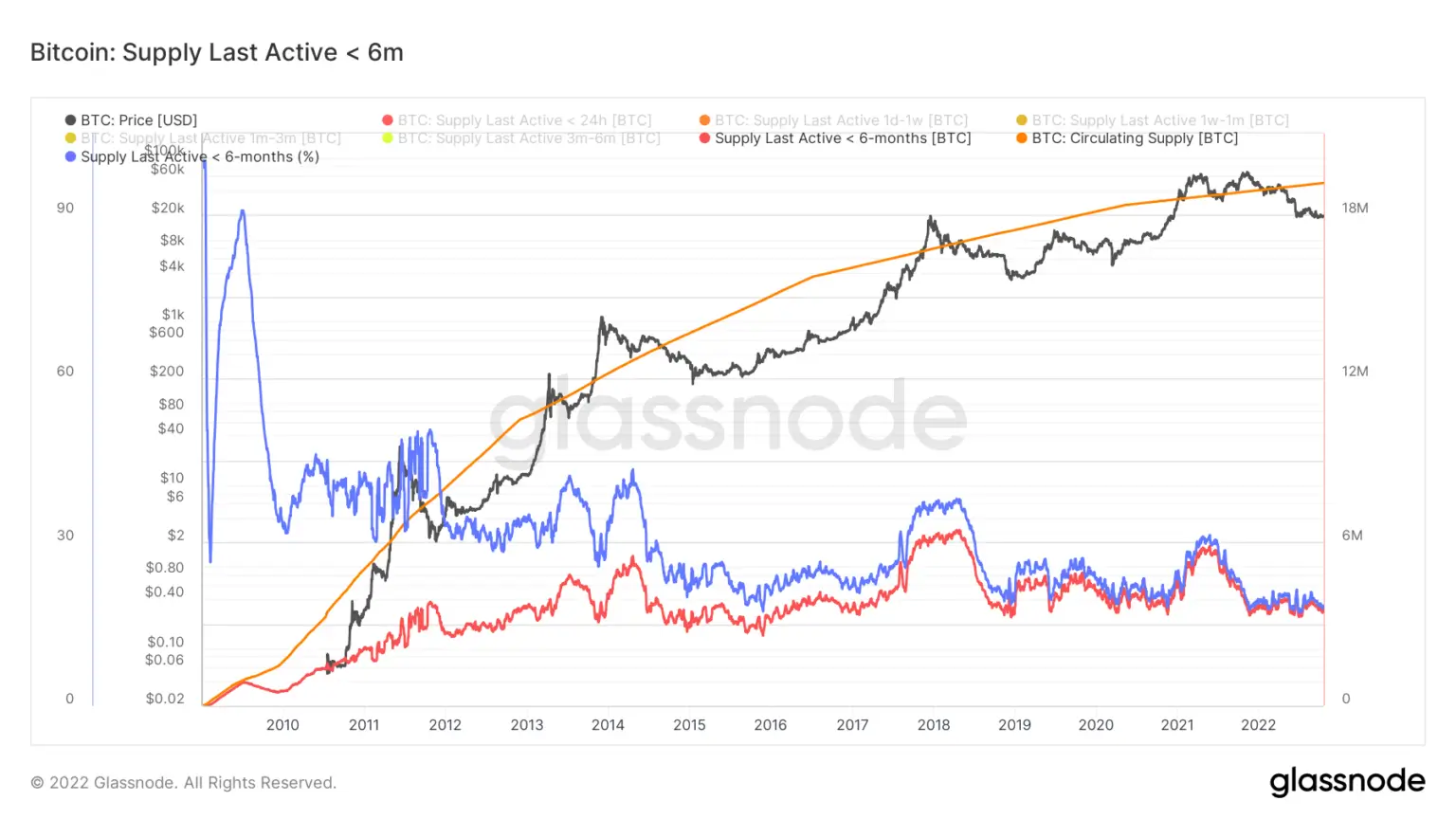
Judging by previous cycles, short-term holders’ behaviors indicate that the market is already near the bottom of this bear cycle,
News from around the Cryptoverse
Tether will be available in over 24,000 ATMs in Brazil
According to an announcement post by Tether, USDT will be available in over 24,000 crypto ATMs in Brazil on Nov.3. This expansion aims at including 34 million unbanked adults in Brazil into the financial system.
Binance acquires regulatory approval from Cyprus
On Oct.20, Binance announced that it received regulatory approval from Cyprus’ financial watchdog, Cyprus Securities and Exchange Commission (CySEC). The license is the fourth one Binance got from the European region.
Coinbase brings commission-free trading via non-USD currencies
Coinbase posted an article on its blog to announce that it will waive commission fees when buying or selling USDC via any fiat currencies to support the international adoption of USDC.
Japan eases rules for token vetting processes
Bloomberg reported today that Japan’s self-regulatory crypto body plans to make it easier to list virtual coins in December. The relaxation of the rules indicates that Japan is seeking to revitalize the crypto sector.
Lens integrates music NFTs
Lens Protocol’s founder Stani Kulechov announced via his Twitter account that Lens started to support music NFTs as content on Lenster, the company’s decentralized social media app.
Indian cricket legend steps into NFTs
India’s cricket legend Sachin Tendulkar dipped his toe into the NFT market by investing in Rario. The news was shared by the cricket team Rario’s Twitter account.
Crypto Market
Bitcoin (BTC) decreased by -0.74% to trade at $19,052 in the last 24 hours, while Ethereum (ETH) also fell by -0.78% to trade at $1,283.


✓ Share: